
Aerospace's AI Bottleneck Is the Signature, Not the Software
AI can generate stress analysis and defect findings faster than engineers can validate them against FAA and EASA standards, and that verification capacity is the real constraint.
AI can generate stress analysis and defect findings faster than engineers can validate them against FAA and EASA standards, and that verification capacity is the real constraint.

Generative AI is outpacing aerospace certification capacity, making evidence-ready validation the real constraint on new materials programs.

Aerospace AI adoption is splitting between use-case clearance frameworks and capability-specific certification, and buyers need to know which track applies before they scale.

Aerospace's fragmented certification landscape is a procurement risk that ISO 42001 and EU AI Act conformity obligations are built to catch, if buyers ask.

Industrial operators are handing agentic AI direct control authority faster than monitoring tools can verify it, and buyers need a risk tier to tell the two apart.

Ono Pharmaceutical's rollout of agentic AI to every discovery scientist exposes a governance gap that sits upstream of any device or wearable regulation.

As agentic AI takes over dispatch and curtailment decisions across the grid, the unresolved question is contractual liability at the utility interconnection point, not emergency shutdown.

Anthropic's new agent-to-machine standard collapses the gap between AI recommendation and AI action, raising the stakes for industrial verification.

Agentic AI now manages power plant and grid operations directly while federal regulators remain deadlocked, leaving operators to build governance without a legal floor.

Nvidia's push for AI agent flight recorders borrows aviation's most visible artifact while skipping the investigation infrastructure that makes it useful.

Tech giants want AI failures treated like aviation incidents, but that framing only holds if the underlying toolchain carries real qualification evidence.

A federal warning on AI-generated PLC exploits shows industrial AI's safety gains and its security exposure now sit on the same infrastructure.

Aviation's directive model regulates known parts and configurations, but AI decision-making is already being governed elsewhere, with real gaps still unresolved.

Discovery-stage AI funding is surging, but the mismatch compliance leaders should track is structural, not a simple case of regulation lagging money.

Closed-loop AI discovery platforms are compressing timelines faster than biopharma governance functions can build the audit trail regulators will eventually demand.

AI now makes autonomous load-balancing and dispatch decisions across solar farms and virtual power plants, and no standard yet assigns liability for a bad call.

AI drug discovery's funding-to-approval gap echoes a governance failure regulators have already documented in medical devices, and the fix is the same.

Generative AI is accelerating molecule design, but no AI-discovered drug has cleared trials, and regulators have yet to define how AI governs the trials themselves.
AI systems making real-time energy allocation decisions across generation, storage, and grid draw are being bought as software, not governed as infrastructure.
As MRO providers adopt AI for engine maintenance decisions, the real test is whether audit trails can withstand FAA and EASA scrutiny.

AI-driven First Article Inspection promises major efficiency gains, but aerospace manufacturers lack a governance layer to verify the verifiers.

ISO/IEC TS 22440 formalizes how AI intersects with functional safety just as EU AI Act high-risk rules and ungoverned agentic deployments collide on the factory floor.

Regulators describe AI, digital health, and clinical trial law as converging, but FDA, UK, and Chinese actions show the frameworks are still moving on separate, misaligned tracks.

Deep learning inspection is moving onto aerospace production lines faster than FAA production certificate holders can document its evidentiary basis.

A contrail trial, a maintenance rollout, and a pilot-training study show aviation already runs AI proving grounds ad hoc, with no structure connecting them.

Autonomous industrial and life sciences AI is now acting inside control loops that IEC 61508, EU AI Act risk tiers, and MDR/IVDR were not built to certify.

FDA's mounting scrutiny of AI medical devices reveals evidence gaps even for cleared products, while pharmacovigilance AI faces no such test at all.
ISO 42001 certifies AI management systems, not real-time physical control performance, and that distinction matters as AI moves into grids, factories, and robots.

AI process control is now shaping regulated credit claims in biogas and RNG production, and no framework yet specifies who audits the machine's decision trail.

Automated AS9100 recordkeeping solves today's audit burden but creates a traceability gap when the generating system is retired before the aircraft is.

Refiners and manufacturers are embedding AI into safety-critical decisions faster than functional safety and cobot standards can validate them.

Refiners and manufacturers are putting AI inside safety-critical decisions, but the verification standards built for deterministic control were never designed for it.

The industrial AI augmentation narrative depends on a senior verification workforce that the same labor shortage driving AI adoption is actively removing.

NASA's Phase II award for an AI-driven airspace coordination network exposes a widening gap between deployable autonomy and the certification frameworks meant to govern it.

FAA's Part 108 drone framework and live AI forecasting in ATC decisions show certification shifting from airframes to software stacks that update faster than any type cert.

As grid AI moves from pilot to production, energy operators must diligence vendor architecture and control enforcement, not just policy promises.

Aviation's tiered certification model is becoming AI governance's default architecture, but its unresolved cross-border recognition gap should worry regulated AI buyers just as much.

Aircraft certification and inspection regimes are built for deterministic systems, and the emerging autonomy stack is exposing what that model cannot see.

Tech firms want AI incident forensics modeled on aviation, but aviation regulators admit they lack a settled method for AI safety assurance.

AI vendors are borrowing aviation's black box for accountability, but the metaphor skips the investigative infrastructure that actually makes it work.

AI oversight levels differ by regulator, and conventional aircraft already take months to clear each one, so programs need a portability plan now.

Cooperative safety certification, not AI capability, is now the gating factor for deploying humanoid robots and automation on industrial floors.

Regulated buyers evaluating aerospace autonomy startups should underwrite the type certificate partnership, not the model's performance claims.

Divergence in AI rules across the US, EU, and China is driven less by geography than by conflicting definitions of what counts as a regulated AI function.

The regulatory perimeter around clinical AI is contested by design, and the same gap is opening upstream in drug development.

Open governance tooling, revised ISO 9001 rules, and national mandates are converging on one requirement: compliance evidence must be structured data, not paperwork.

Drug discovery leaders are validating AI systems as if they were complicated, when the real risk is that they behave as complex, emergent systems.

Google and NATS are piloting AI contrail-avoidance forecasts inside live UK airspace, putting EU AI Act high-risk obligations to their first real operational test.

As airlines and regulators lean on machine learning to forecast and verify contrail avoidance, the missing piece is an audit standard for the claims themselves.

A North Atlantic contrail avoidance trial shows how AI-driven environmental claims and rerouting decisions are outrunning verification and liability frameworks.

FAA CVR upgrade deadlines fix a human-decision recording problem, but certified automation and drone autonomy are advancing on entirely separate regulatory tracks with no equivalent record.

FAA's cockpit voice recorder mandate is a hardware deadline today, but the data architecture choices made now will determine how AI safety analytics work later.
KAI's in-house UAV AI verification and Safe Pro's trade-show validation show how little civil frameworks like ISO 42001 or the EU AI Act reach into defense AI assurance.

Bilateral aviation certification still works for conventional hardware, but no framework yet governs the AI and autonomous systems entering the same operational footprint.

As energy developers use AI digital twins to greenlight capital projects, the real governance gap is model validation, not machine safety.

SAE's updated supply chain standard loosens incoming inspection just as AI-based NDT and optical inspection take over quality gates, raising a validation gap buyers must close.

Whisper Aero's move toward both civil and defense markets shows why buyers must ask which certification regime an AI-enabled aircraft's assurance evidence actually targets.

Aviation and defense autonomy timelines aren't really comparable, but both depend on the same unglamorous evidentiary layer regulators will demand.

EMA's lifecycle-wide AI reflection paper and FDA's still-open genAI device rulemaking are running on different clocks, and neither is finished business for regulated buyers.

Regulators are drafting kill switches for frontier AI while agentic dispatch systems already run unaudited energy and battery decisions in production.

Kill switch mandates and machinery certification govern control layers, but agentic energy AI needs continuous model recalibration neither framework requires.

While FDA's device guidance draws attention, a parallel track for AI in early-phase clinical trials and drug development is quietly taking shape.

US data provenance, UK product classification, and Chinese jurisdictional scope are all cracking under AI health tools that don't fit pre-AI regulatory taxonomy.

Regulatory frameworks are expanding toward AI in drug development, but the real exposure is a silent-failure risk that neither hype skeptics nor regulators are pricing in yet.

Hospitals and pharma functions adopting generative AI now carry governance obligations that device and drug frameworks were never built to cover.

For agentic AI in energy and industrial control, liability exposure is set by vendor technical standards and contract terms, not by which government's AI regime is more mature.

A new open source coalition for AI governance testing forces energy and industrial buyers to choose between proprietary control stacks and shared standards.

Energy infrastructure capital is being allocated to AI-driven grid modernization faster than utilities can document what that AI actually delivers.

AI systems are moving from monitoring power infrastructure to executing real-time control decisions, and operators lack a governance layer for who authorized that authority.

For energy operators buying AI grid-optimization tools, the architecture choice between vendor-owned sensors and OT data access sets the cybersecurity liability line.

AI-augmented HAZOP validation focuses on model accuracy, but the compute and energy infrastructure the model depends on is an unaddressed safety variable.

EASA's warning that atmospheric icing remains poorly understood exposes a governance blind spot for AI systems built to detect and predict physical hazards.

AI-augmented HAZOP is testing industrial AI safety cases, but the harder unresolved question is power and grid resilience, not just compute.

As aviation AI outpaces formal safety assurance, insurers are quietly setting the terms buyers must satisfy to fly.

Same Annex SL, different risk. Why security-mature organizations have an ISO 42001 gap, what it costs in regulated industries, and why the clock is now measured in months.

NADEC's ISO 42001 certification gives industrial AI buyers a reference point, but one certificate does not settle whether the standard closes the gap between documented control and operational reality.

ISO 9001's revision pulls AI-influenced decisions into quality documentation, but it does not replace ISO 42001, the EU AI Act, or sector-specific AI governance.

India's mandate for machine-readable product standards previews a structural shift industrial AI buyers cannot ignore: verification against static documents will not scale.

Runtime monitoring is emerging alongside, not instead of, pre-deployment certification, and buyers need to hold vendors accountable for both.

A new AFWERX contract for real-time model health monitoring signals that AI assurance in defense and aerospace must be continuous, not a one-time certification event.

As AI-guided robots move onto production floors, buyers face a governance decision functional safety certificates were never built to answer.

Capital markets are pricing autonomous-machine safety infrastructure before regulators have defined what a defensible hazard dataset looks like.
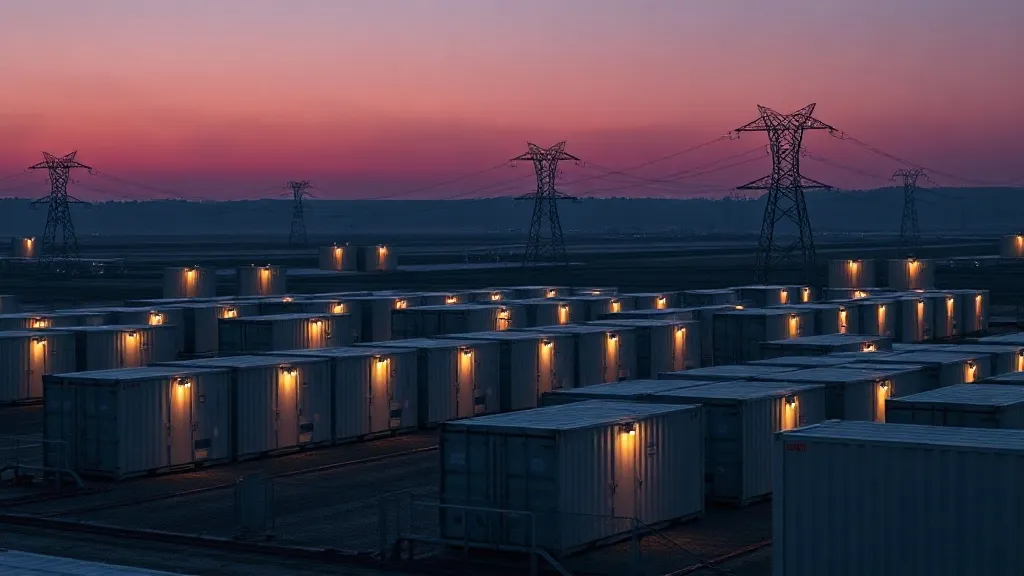
Gigawatt-scale AI data center power deals are outrunning both utility interconnection and AI safety regulation, leaving operators to self-govern autonomous grid control.

Samsung and SK hynix are mandating embedded AI agents in new equipment orders faster than ISO 42001 or the EU AI Act can define what compliant industrial AI actually requires.
The gap between one-time AI certification and continuous model drift is old news; the funding and liability questions forming around it are not.

Explainability and adversarial robustness are becoming safety-case requirements, and aerospace buyers should demand that evidence before regulators mandate it.

A joint runway incursion initiative and AI-driven safety reporting tools push AI into cross-organizational safety decisions without a clear accountability structure.

Space operators are adopting AI-enabled threat detection and zero-trust architectures with no sector-specific certification regime to verify the claims.

International standards bodies are drafting industrial AI rules in real time, forcing compliance leaders to build on existing frameworks rather than wait for finished ones.

Industrial AI autonomy and AI agent security are the same governance question asked from opposite ends, and only one side has drawn real investment.

AI is moving from grid advisory to grid execution, but the pace is a bet on scaling, not a settled fact, and assurance regimes haven't caught up either way.

As industrial AI deployment accelerates unevenly, the decision to withhold automation is becoming as auditable as the decision to deploy it.

As AI-based safety monitoring scales across industrial sites, the surveillance systems themselves are becoming a governance and cybersecurity liability, not just a sensor purchase.

Aviation safety leaders are being sold a single fix for what are actually two distinct AI assurance failures, and conflating them will leave both unaddressed.

As utilities wire agentic AI platforms into grid operations to capture real savings, few have updated vendor governance for critical infrastructure dependency.

A sponsored case for vertical AI in utilities collides with a real state-level regulatory split, and the fix is narrower than a single governance framework.

As Anthropic formalizes how AI agents talk to machines, industrial verification is shifting from governance policy to interface protocol before regulators arrive.

As industrial AI vendors race to automate control logic and physical machine operation, regulated operators still lack a named answer to who verifies the output.

Locked versus adaptive AI is a settled regulatory distinction. The unsettled question is whether contracts require anyone to preserve the model state behind a licensed output.

Dassault's purchase of ArisGlobal and Red Hat's open agent-safety project show two competing paths for AI governance, and industrial buyers must pick one before they scale agentic AI.