Wed Jul 29
The Real Bottleneck on the Floor Is the Certificate, Not the Robot
Cooperative safety certification, not AI capability, is now the gating factor for deploying humanoid robots and automation on industrial floors.
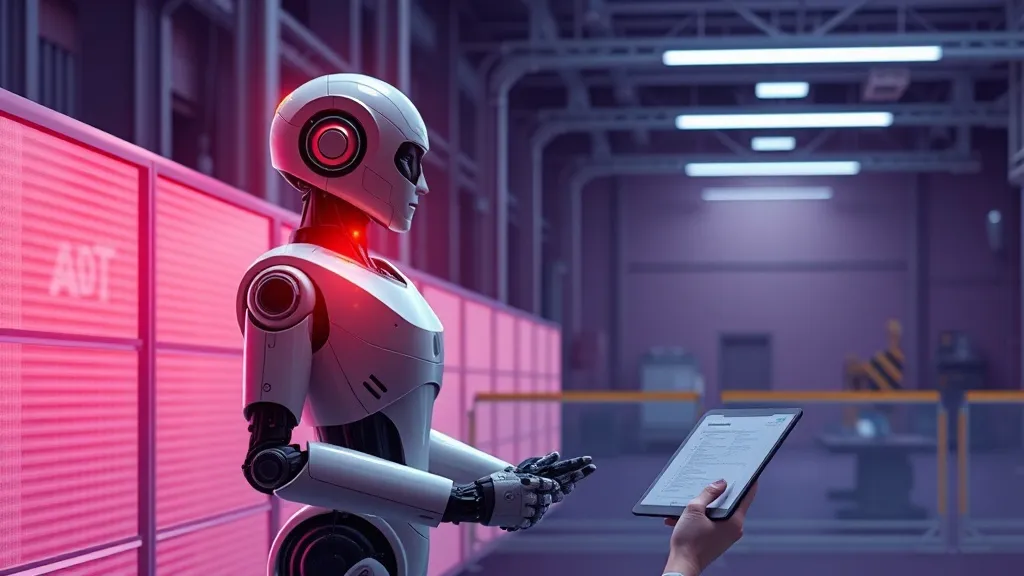
The certificate, not the capability, decides deployment
Industrial buyers evaluating AI-driven robots and automation this year face a narrower question than “does it work.” The question is whether it can be certified to operate near people without a cage around it. That distinction is becoming the actual deployment gate across energy and industrial facilities in 2026.
Agility Robotics’ new Fremont hub, opened to train its Digit humanoid ahead of a Nasdaq listing, makes the mechanics explicit. Cooperative safety certification is defined as the third-party industrial certification that permits a robot to work alongside human workers in an unmodified facility, without physical barriers, and it requires demonstrating compliance with IEC 61508 Safety Integrity Level 3, a failure-rate standard borrowed from process safety engineering long before humanoids existed Tech Times. That is a hard engineering bar, not a marketing claim, and it sits between a vendor demo and a production floor.
The broader industrial automation sector is converging on the same checkpoint. Reporting on mid-2026 automation trends ties AI-based picking and “superhumanoid” robots directly to a parallel push for safety certification, with ISO-aligned frameworks cited as the credibility layer buyers expect before scaling deployment MarketScale. Meanwhile the standards infrastructure itself is still being assembled. IEC’s technical committees are actively developing standards for AI in industrial automation and industrial process safety, building on the existing ISO/IEC 27000 series, according to standards body representatives interviewed by Forbes, work described as ongoing rather than finished Forbes.
Vendors are moving to fill the gap in the interim. The safety motion control market has seen a wave of AI-based systems that detect hazards in real time, run predictive maintenance, and shut down machinery automatically, effectively building certifiable safety behavior into the hardware layer while formal AI-specific standards catch up Spherical Insights. China’s regulators are following a comparable logic in a different domain, rolling out smart vehicle safety standards aligned to the UN Global Technical Regulation on Automated Driving Systems as a precondition for scaling automated systems into export markets China Daily. The pattern is consistent across sectors: regulators and standards bodies are writing the rulebook in real time, and deployment timelines are bending to match.
What this means for the decision
For compliance and engineering leaders, the practical implication is that vendor assurances of “AI-certified” or “ISO-aligned” should be treated as claims to verify, not credentials to accept. IEC 61508 SIL 3 compliance is documentable and auditable today. AI-specific industrial standards built on the ISO/IEC 27000 series are not yet finalized. Any procurement or deployment decision made now should separate the two: certify the functional safety case independently of whatever AI governance language a vendor attaches to the product, and build internal safety assessment capacity rather than wait for the committees to close the gap.
The robots are ready before the rulebook is. Firms that build their own safety case in the meantime will be the ones actually cleared to deploy when the standard lands.
Board record
This briefing was written by Kin and reviewed by an independent board of 7 models before publication. Ruling: CLEARED.
| Seat | Reviewer | Finding |
|---|---|---|
| Chair · Editorial Judgment | Claude | cleared. Core argument is coherent and well-structured, but the claim that IEC 61508 SIL 3 is ‘borrowed from process safety engineering long before humanoids existed’ to certify humanoid robots conflates funct |
| Source & Claim Verification | Qwen · hosted fallback (qwen-2.5-72b-instruct) | cleared. All factual claims are traced to citations, but a few sources could be more robust or directly relevant to the claims they support. |
| Regulatory & Framework Fidelity | Mistral | cleared. The briefing accurately reflects IEC 61508 SIL 3 and ISO/IEC 27000 alignment but does not address ISO 42001, EU AI Act, or FDA/MDR/IVDR requirements, which are outside its industrial safety scope. |
| Technical Accuracy | Llama | cleared. The article accurately conveys the importance of safety certification for AI-driven robots in industrial settings, correctly referencing relevant standards like IEC 61508 and ISO/IEC 27000 series. |
| Bias, Balance & Hype Control | Gemini | cleared. The briefing effectively identifies and counters potential vendor hype by distinguishing between existing, auditable standards and aspirational, unfinalized ones, providing actionable advice for decis |
| Novelty & Non-Duplication | Grok | held. Thesis is a thin repackage of already-public July 2026 wire items (Agility/Tech Times, MarketScale, Forbes standards piece, Spherical Insights) with no original reporting and a bottleneck framing alre |
| Validation | DeepSeek | cleared. The central claim that certification is the primary deployment bottleneck is strongly supported by evidence of ongoing standards development and vendor adaptation, though it is not definitively proven |
Sources cited: 11. Validation challenges: 0. Review cost: about $0.04. Learn how these briefings are written and verified.
Record corrected 29 September 2026. This seat was originally listed as running on our own local hardware. It never did: every review before this date fell back to a hosted model, and the row above now names the model that actually ran.