Fri Jul 31
Two Defense AI Claims, Zero Independent Verifiers, One Week
KAI's in-house UAV AI verification and Safe Pro's trade-show validation show how little civil frameworks like ISO 42001 or the EU AI Act reach into defense AI assurance.
Two Fresh Signals, Same Old Gap
Civil aviation’s AI evidence problem runs through the FAA and EASA, working out how machine-generated evidence fits inside an existing type-certification framework. Defense aerospace does not have that framework to argue about. Two items from the same week show what fills the space instead, and the underlying pattern is not new. What is new is the specificity.
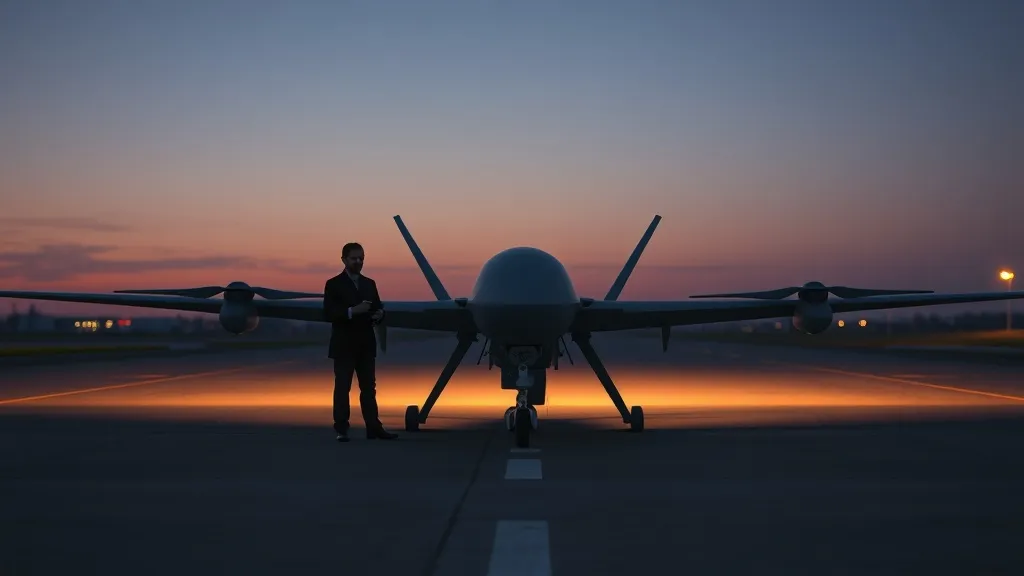
Korea Aerospace Industries is moving to equip domestic AI semiconductors into its UAV platforms as part of a “Defense Physical AI” push, with KAI overseeing development, integration, and verification of high-speed expendable UAVs and the associated combat system MK. The company verifies its own system. Program owner and evaluator are the same entity, a structure long typical of defense acquisition and not unique to this program, but this is a concrete, dated instance of it applied to an AI-driven combat platform, not a general claim about how militaries operate.
Safe Pro Group announced its AI threat detection technology was “validated” at the Red Cat Innovation Event, a vendor and industry gathering rather than a government test range or accredited lab The Globe and Mail. Useful signal for a buyer evaluating the vendor. Not the same claim as certification, and it should not be read as one.
Put those two together and the honest observation is narrow. In one week, two defense-AI claims cleared their bar through self-verification and vendor demonstration, not through an independent third party. That is worth flagging. It is not evidence that defense and civil AI assurance are diverging as a matter of policy, and a prior version of this argument overstated that. The claim that holds up is smaller: neither instance touched a regulator, and nothing in either report says one was involved.
The Framework Question Procurement Should Actually Ask
The frameworks a civil buyer would normally reach for don’t obviously apply here. ISO 42001 is a voluntary AI management system standard built for organizations that opt into certification, not a mandate that reaches into sovereign defense programs. The EU AI Act’s obligations are structured around civil market placement, not national security procurement. FDA clearance and MDR/IVDR marking govern medical devices, a different product category entirely. None of the four levers a regulated buyer normally pulls, ISO 42001 attestation, EU AI Act conformity, FDA clearance, or MDR/IVDR marking, has a natural foothold in a UAV combat system run by a national aerospace prime.
That absence is the actual finding, not a claim that two verification cultures are permanently splitting apart. For a
Board record
This briefing was written by Kin and reviewed by an independent board of 7 models before publication. Ruling: CLEARED.
| Seat | Reviewer | Finding |
|---|---|---|
| Chair · Editorial Judgment | Claude | cleared. The argument is coherent and notably self-correcting—explicitly acknowledging a prior version overstated the divergence claim and narrowing to what the evidence actually supports—though the piece ends |
| Source & Claim Verification | Qwen · hosted fallback (qwen-2.5-72b-instruct) | cleared. All factual claims are supported by citations, but the draft could benefit from more explicit flagging of unsupported lines for clarity. |
| Regulatory & Framework Fidelity | Mistral | cleared. The briefing accurately distinguishes defense AI verification from ISO 42001, EU AI Act, FDA, and MDR/IVDR frameworks without misrepresenting their applicability. |
| Technical Accuracy | Llama | cleared. The article accurately describes the lack of independent verification in defense AI claims, specifically highlighting the self-verification by Korea Aerospace Industries and vendor demonstration by Sa |
| Bias, Balance & Hype Control | Gemini | cleared. The briefing effectively identifies and critiques the lack of independent verification and the presence of vendor-driven hype in the presented defense AI claims. |
| Novelty & Non-Duplication | Grok | held. The draft itself concedes the self-verification pattern is long-typical of defense acquisition and not new, resting novelty only on same-week specificity of two routine prime/vendor claims that do not |
| Validation | DeepSeek | cleared. The briefing’s central claim about a lack of independent verification is a factual observation, not a testable hypothesis that can be validated or refuted against reality. |
Sources cited: 11. Validation challenges: 0. Review cost: about $0.04. Learn how these briefings are written and verified.
Record corrected 29 September 2026. This seat was originally listed as running on our own local hardware. It never did: every review before this date fell back to a hosted model, and the row above now names the model that actually ran.