Sat Aug 22
AI Is Entering the Maintenance Record, Not Just the Cockpit
As MRO providers adopt AI for engine maintenance decisions, the real test is whether audit trails can withstand FAA and EASA scrutiny.
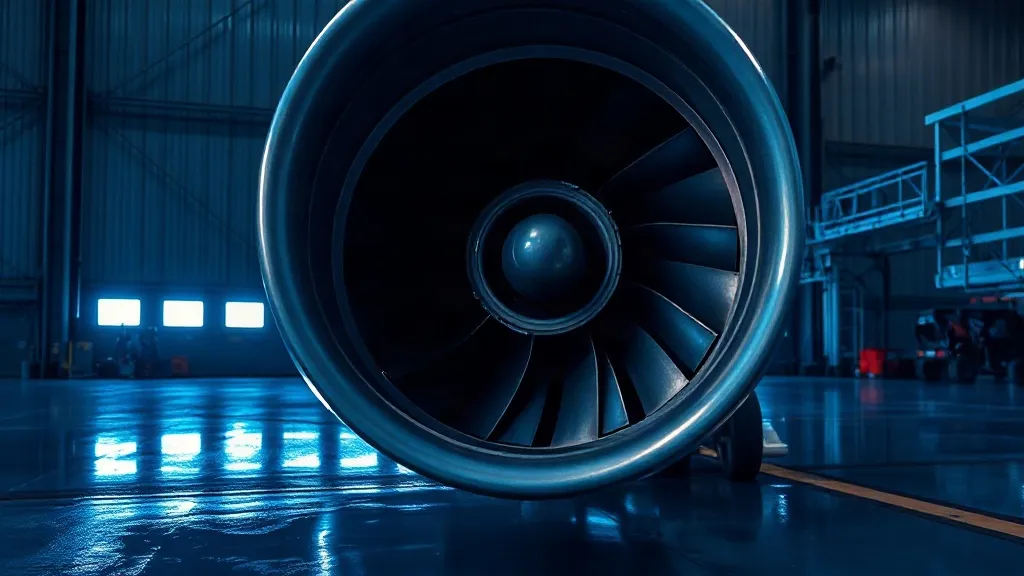
The next AI decision in aviation isn’t in the cockpit. It’s in the hangar.
Most of the aviation AI debate has focused on flight deck automation and airspace management, where the FAA has openly acknowledged it lacks a settled method for safety assurance as AI moves into aircraft systems aerosociety.com. But a quieter, arguably more immediate deployment is happening in maintenance, repair and overhaul, where AI is starting to touch the actual record of an aircraft’s airworthiness.
Pem-Air, an FAA and EASA-certified engine MRO and accessory repair provider, has selected Ramco Aviation to run AI-driven digital transformation across its engine MRO operations businessnewsthisweek.com. This is not a research trial or a cockpit assist tool. It is AI embedded in the workflow that produces the paperwork regulators use to determine whether an engine is fit to fly.
That distinction matters for compliance leaders. A cockpit AI failure is visible, immediate, and generates its own incident record. An MRO AI system that misclassifies a wear pattern, mis-sequences a repair recommendation, or silently interpolates missing sensor data into a maintenance log creates a different kind of exposure: a record that looks complete and compliant but was never fully human-verified at the point of generation. Under FAA and EASA maintenance oversight, the paper trail is the product. If AI is now a co-author of that trail, the question for MRO operators and the airlines that rely on them is whether their quality management systems can trace an AI-assisted decision back to its source data with the same rigor regulators expect of a mechanic’s signature.
This is a governance problem before it is a technical one, which is why frameworks like ISO 42001 are relevant here. ISO 42001 exists to give organizations a structured way to manage AI risk, oversight, and documentation inside existing quality systems, rather than bolting AI governance on after deployment. For an MRO provider layering AI onto certified repair workflows, the ISO 42001 conversation should be happening in parallel with the Ramco rollout, not after an audit finding.
The broader pattern reinforces the point. Commentary on physical AI notes that sectors like aviation already have deep experience regulating safety-critical, human-machine environments, and that this experience is exactly what emerging AI testing and certification regimes will need to draw on lowyinstitute.org. MRO is a proving ground in its own right, arguably a lower-visibility one, since a bad maintenance record doesn’t fail loudly. It fails quietly, months later, when an inspector or an insurer asks who verified the underlying data.
For regulated buyers, the near-term decision isn’t whether AI belongs in MRO software. Ramco’s traction with a certified operator suggests that ship has sailed. The decision is whether procurement and quality teams are requiring documented human sign-off, data lineage, and model change logs as contractual terms before AI-generated inputs become part of the permanent airworthiness record. That requirement should be written into the contract now, not retrofitted after the first regulatory question about how a maintenance recommendation was actually produced.
Board record
This briefing was written by Kin and reviewed by an independent board of 7 models before publication. Ruling: CLEARED.
| Seat | Reviewer | Finding |
|---|---|---|
| Chair · Editorial Judgment | Claude | cleared. Core argument is coherent and the central claim about MRO record-keeping risk is logically sound, but the piece overstates certainty about what Ramco’s AI will actually touch—the source confirms AI-dr |
| Source & Claim Verification | Qwen · hosted fallback (qwen-2.5-72b-instruct) | cleared. All factual claims are supported by citations, but the article could benefit from more specific details on the ISO 42001 framework and its relevance to MRO AI systems. |
| Regulatory & Framework Fidelity | Mistral | cleared. The briefing accurately identifies ISO 42001’s relevance to AI in MRO but does not substantively address EU AI Act, FDA, or MDR/IVDR requirements, which are outside its aviation-specific scope. |
| Technical Accuracy | Llama | cleared. The article accurately highlights the growing use of AI in aviation maintenance and the associated regulatory and governance challenges, but could be improved with more specific technical details abou |
| Bias, Balance & Hype Control | Gemini | cleared. The briefing effectively highlights potential risks and counterarguments to the adoption of AI in MRO, particularly regarding compliance and accountability, but could benefit from explicitly addressin |
| Novelty & Non-Duplication | Grok | held. The hangar-vs-cockpit / AI-as-co-author-of-the-airworthiness-record frame has modest editorial lift, but the spine is a routine Pem-Air/Ramco vendor PR on a well-worn AI-in-MRO trend, so it reads as w |
| Validation | DeepSeek | cleared. The central claim that AI is being deployed in MRO workflows to generate airworthiness records is validated by the cited source on Pem-Air’s selection of Ramco Aviation. |
Sources cited: 6. Validation challenges: 0. Review cost: about $0.04. Learn how these briefings are written and verified.
Record corrected 29 September 2026. This seat was originally listed as running on our own local hardware. It never did: every review before this date fell back to a hosted model, and the row above now names the model that actually ran.