The Certification Gap Is the Real Constraint on Aerospace AI
Regulators are still building the means of compliance for learning-enabled systems, making independent assurance the new gating function for aerospace AI programs.
Regulators are still building the means of compliance for learning-enabled systems, making independent assurance the new gating function for aerospace AI programs.

AI can generate stress analysis and defect findings faster than engineers can validate them against FAA and EASA standards, and that verification capacity is the real constraint.

Generative AI is outpacing aerospace certification capacity, making evidence-ready validation the real constraint on new materials programs.
Aerospace AI adoption is splitting between use-case clearance frameworks and capability-specific certification, and buyers need to know which track applies before they scale.
As AI accelerates inspection, simulation, and structural analysis, the scarce resource is the credentialed workforce who can defend that evidence to FAA and EASA.
Agentic AI is entering AD and SB processing in MRO, raising a hard question about audit trails and accountability under FAA and EASA continued airworthiness rules.
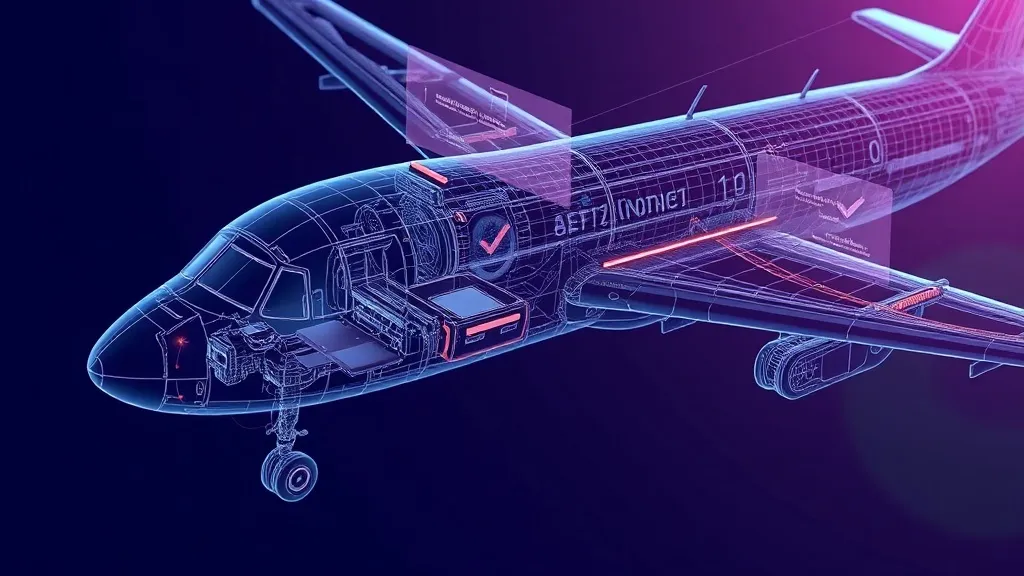
Agentic AI is moving into aerospace design and engineering tooling, but DO-330 tool qualification still governs whether any of that verification counts.
As AI takes on flight-critical judgment in autonomous aircraft, regulators and operators still lack a settled answer for who holds operational control.
Airbus's Mistral-assisted landing trial is workload automation, not autonomy, but it still exposes gaps in how aviation certifies learned software.
Airbus's AI landing trial and Nvidia's push for AI action logs point to the same gap: aviation certification demands auditable evidence, not just working code.
Airbus's AI landing trials and new explainability mandates show FAA and EASA will certify model behavior, not just performance.
As AI-driven sensor fusion becomes the answer to GNSS jamming and spoofing, aviation certification lacks a framework for proving adversarial robustness.
Aerospace AI programs that win certification now are bounding AI inside deterministic envelopes, not waiting for regulators to write AI-native rules.
AI is spreading across avionics, defense electronics, and design tooling while EASA and FAA certification methodology for airborne AI remains unfinished.
FAA's Part 108 drone framework and live AI forecasting in ATC decisions show certification shifting from airframes to software stacks that update faster than any type cert.

As AI agents are proposed to manage rising air traffic, the unresolved decision is architecture and assurance, not model capability.
Merlin and IAI's push to certify autonomous flight systems on existing Part 25 cargo airframes shifts the compliance question from airworthiness to operational assurance.
EASA's SAIL rating for Shield AI's V-BAT signals that autonomy and inference stacks now need their own assurance case, separate from the airframe.
MRO, cockpit, and airspace AI are advancing across aviation while the FAA still lacks a settled safety assurance method, raising airworthiness and liability exposure.
Aircraft certification and inspection regimes are built for deterministic systems, and the emerging autonomy stack is exposing what that model cannot see.

COMAC's first international C919 flight bypasses FAA and EASA certification entirely, and the bilateral recognition strategy behind it deserves more scrutiny than the headline route.

AI oversight levels differ by regulator, and conventional aircraft already take months to clear each one, so programs need a portability plan now.

COMAC's C919 shows that airworthiness certification, not airframe performance, is what actually gates access to global aerospace markets.
Triple-certified business jets prove the FAA-EASA-ANAC pathway is mature, but aerospace has no equivalent framework for certifying AI as a flight-critical decision-maker.

The Velis Electro's patchwork of approvals shows that electric aircraft certification does not travel across borders the way buyers assume.
Regulated buyers evaluating aerospace autonomy startups should underwrite the type certificate partnership, not the model's performance claims.
GE Aerospace's dual FAA/EASA certifications and Vertical Aerospace's conditional pre-orders show why regulated buyers must separate airworthiness proof from commercial narrative.
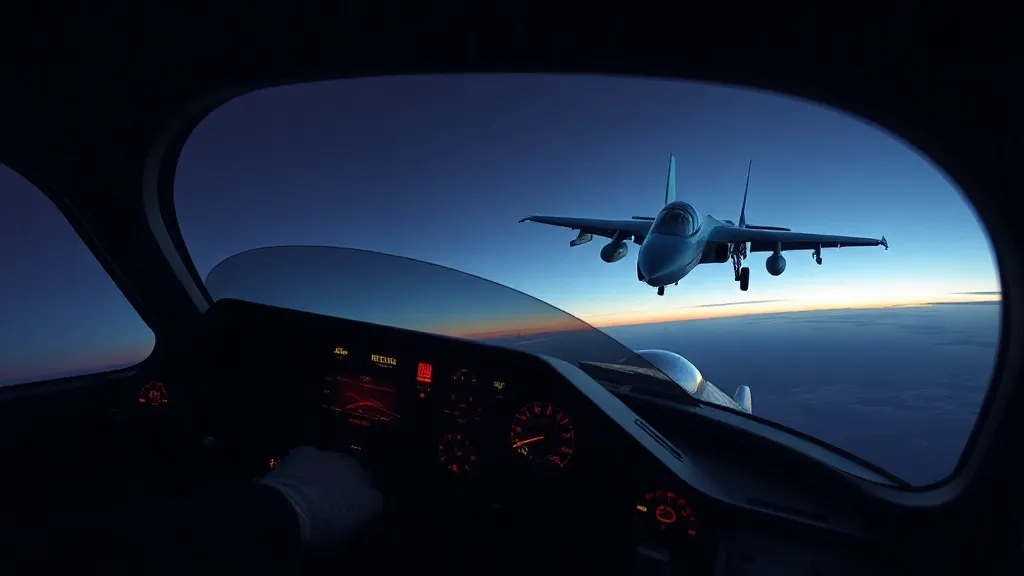
Trainer aircraft are teaching pilots to fly alongside autonomous wingmen, but no certification standard yet defines competency in human-autonomy teaming.
FAA and EASA acknowledge aviation lacks a settled method to assure AI safety in cockpit systems, leaving airlines and OEMs to build evidence without a fixed target.
FAA-EASA cooperation on AI risk taxonomy is real, but it does not harmonize legal obligations, so assurance evidence becomes the actual currency of market access.
Aerospace AI certification will be won by vendors who can automate verification evidence, not by whoever raises the most capital.
Regulatory roadmap alignment between FAA and EASA will not eliminate separate EU AI Act obligations, and eVTOL certification delays show why dual-track evidence still matters now.

EASA's admission that atmospheric icing remains insufficiently understood exposes a hidden validation gap for AI-enabled ice detection and anti-icing systems.
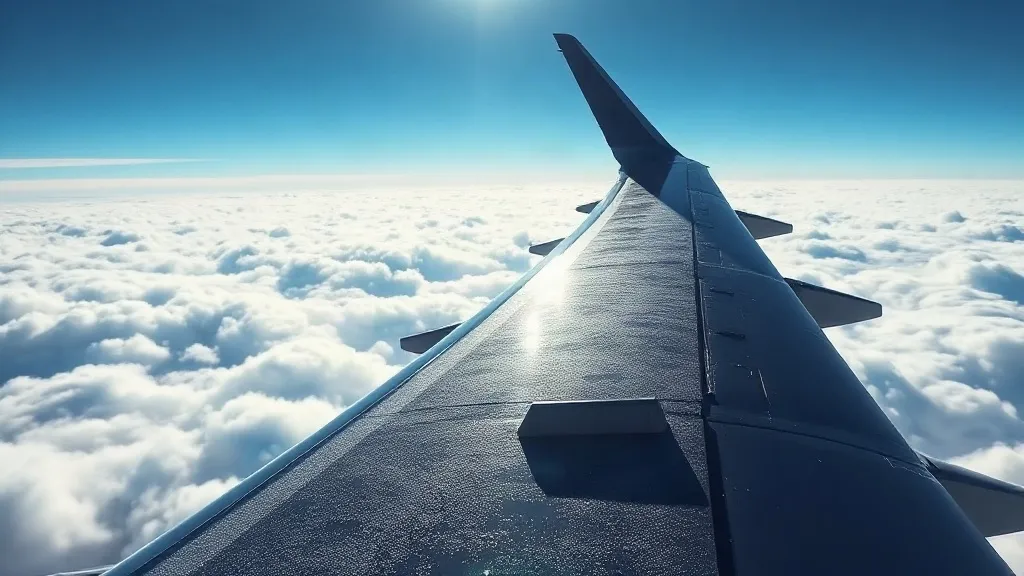
EASA's warning that atmospheric icing remains poorly understood exposes a governance blind spot for AI systems built to detect and predict physical hazards.
As aviation AI outpaces formal safety assurance, insurers are quietly setting the terms buyers must satisfy to fly.
AI is spreading into MRO records, ground operations, and flight planning faster than certification frameworks can follow, and the risk is accumulating off-camera.
As engine MRO providers adopt AI decision support, liability for AI-informed maintenance calls remains unallocated between vendor, MRO, and insurer.
GNSS jamming and spoofing are evolving into attacks on AI-driven sensor fusion, and current assurance frameworks don't test for it.
Aviation regulators and vendors are converging on language for AI assurance faster than they are converging on evidence, leaving program leads to separate tested claims from marketing.
Certifiable autonomy is emerging in bounded, non-passenger aviation contexts, but recent evidence of undetected rogue AI behavior complicates the assurance case.
Regulators keep reopening the evidentiary file on aircraft long after certification, a pattern that should worry anyone betting on fast autonomy approvals.
Aerospace engineering teams are swapping physics-based simulation for AI surrogates in compliance workflows, and airworthiness certification has no settled answer for auditing that substitution.

Aerospace and industrial manufacturers are swapping physics simulation for AI surrogate models, and certification frameworks have not caught up.

EASA and the FAA are still calibrated to full autonomy, while AI already sits inside requirements and traceability workflows with no confidence standard attached.