Wed Jul 29
The Real Gate on Industrial AI Isn't the Model. It's the Safety Case.
As AI moves from dashboards to actuators on the plant floor, functional safety certification becomes the binding constraint on deployment, not model performance.
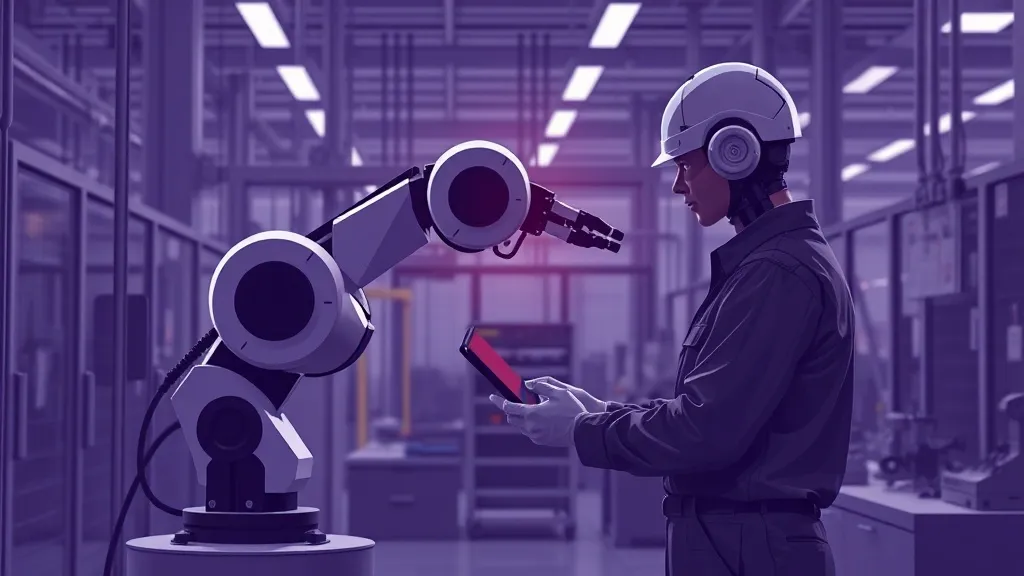
The bottleneck has moved
For the last two years, industrial AI conversations centered on capability. Can the model detect the defect, optimize the drilling path, forecast the load. That question is largely settled. Saudi Aramco’s Khurais field has reported a 15 percent production increase through AI-enabled optimization across its sensor network, and SLB’s autonomous drilling deployments with Equinor offshore Brazil have measurably improved drilling efficiency Atlantic Council. Capability is no longer the buying decision. Certification is.
The clearest signal is in robotics. Agility Robotics is training its Digit humanoid toward what the industry calls cooperative safety certification, the third-party clearance that permits a robot to work alongside people in an unmodified facility with no physical barriers. That clearance requires demonstrated compliance with IEC 61508, specifically Safety Integrity Level 3, a defined probability of dangerous failure per hour Tech Times. That is not an AI benchmark. It is a functional safety standard written decades before generative AI existed, now being retrofitted as the gate for AI-driven physical autonomy.
The same pattern shows up in safety motion control. Vendors are now shipping AI-based systems that detect hazards in real time, run predictive maintenance, and auto-shutdown machinery, but the market differentiator is which of them can produce a certified safety case, not which has the most sophisticated hazard model Spherical Insights. Industrial automation coverage heading into mid-2026 confirms the same shift: AI picking and humanoid deployment stories are now inseparable from the safety certification push that gates them MarketScale.
Standards bodies are racing to catch up, not lead
This matters because the standards infrastructure is still being built in real time. IEC technical committees are actively developing AI-specific guidance for industrial automation and cybersecurity, extending the ISO/IEC 27000 information security series to cover AI in industrial processes Forbes. Buyers deploying AI-driven physical systems today are effectively certifying against a moving target. That is precisely the gap ISO 42001 is meant to manage on the governance side, giving operators a documented AI management system to sit alongside functional safety certification, rather than treating AI risk as a bolt-on to existing IEC 61508 or ISO 13849 processes.
The decision for buyers
For energy and industrial operators, the procurement question is no longer “how good is the model.” It is “show me the SIL rating, the certifying body, and the AI management system that governs retraining and drift.” Any vendor selling AI-enabled actuation, whether a cobot, an autonomous drilling controller, or a grid-forming inverter, should be able to produce a third-party safety certificate and a documented AI governance framework, not a performance deck.
Capability got the industry to the pilot. Certification decides who gets past it.
Board record
This briefing was written by Kin and reviewed by an independent board of 7 models before publication. Ruling: CLEARED.
| Seat | Reviewer | Finding |
|---|---|---|
| Chair · Editorial Judgment | Claude | cleared. The central argument—that certification has displaced capability as the industrial AI bottleneck—is coherent and well-supported by the evidence marshaled, though the claim that capability questions ar |
| Source & Claim Verification | Qwen · hosted fallback (qwen-2.5-72b-instruct) | cleared. Most factual claims are supported by citations, but a few lines lack specific references, such as the claim about the shift in industrial AI conversations from capability to certification. |
| Regulatory & Framework Fidelity | Mistral | cleared. The briefing accurately references IEC 61508 and implies alignment with ISO 42001 for AI governance but does not explicitly demonstrate compliance with EU AI Act, FDA, or MDR/IVDR requirements. |
| Technical Accuracy | Llama | cleared. The article accurately discusses the shift from AI capability to safety certification in industrial AI applications, citing relevant standards such as IEC 61508 and ISO 42001. |
| Bias, Balance & Hype Control | Gemini | cleared. The briefing effectively identifies and counters potential vendor hype by shifting the focus from AI capability to safety certification, though it could benefit from explicitly addressing counterargum |
| Novelty & Non-Duplication | Grok | held. The certification-as-bottleneck thesis is a straight remix of themes already explicit in the cited MarketScale, Forbes, and Agility Robotics coverage, with no proprietary angle or departure from the w |
| Validation | DeepSeek | cleared. The central claim that certification is the primary gate for industrial AI is strongly supported by cited industry reports and specific company examples, though it is a forward-looking assertion about |
Sources cited: 11. Validation challenges: 0. Review cost: about $0.04. Learn how these briefings are written and verified.
Record corrected 29 September 2026. This seat was originally listed as running on our own local hardware. It never did: every review before this date fell back to a hosted model, and the row above now names the model that actually ran.