Wed Aug 05
The Grid Is Now Trusting AI's Own Numbers
AI vendors claim they can unlock grid capacity and cut power volatility, but utilities are making capital decisions on unaudited performance figures.
The capacity story has flipped
For two years the energy narrative around AI was demand. Data centers need power, grids are constrained, interconnection queues stretch for years. That story hasn’t gone away, and the tradeoffs are real for lower-income and grid-constrained regions weighing AI infrastructure against basic electrification needs, as the Observer Research Foundation has flagged.
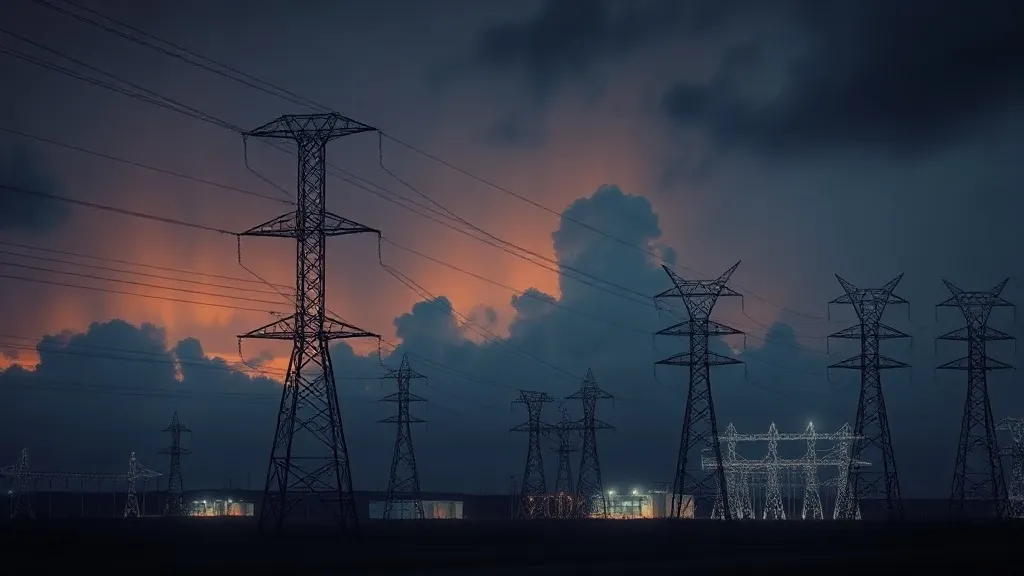
But a second story is now running in parallel, and it inverts the first. AI is being sold as the fix for the very capacity problem it created. The IEA has found that AI-driven sensor tools applied to existing transmission infrastructure could unlock up to 175 GW of additional capacity, and that AI-based fault detection can cut outage durations by 30 to 50 percent. Vendors are moving fast on both fronts. Empromptu AI’s Grid Guard claims an 80 percent reduction in power volatility for data center loads. Redaptive and Recurve’s Surrounding Grid program bundles cooling optimization, battery storage, and real-time energy management into a package explicitly marketed to speed interconnection. Encycle just picked up a sustainability award for AI-driven HVAC optimization tied to measurable grid resilience gains.
Whose numbers are these
Here is the decision utilities and data center developers now face. Interconnection agreements, capital allocation, and capacity planning are starting to lean on performance figures that come almost entirely from the vendor or from aggregate industry modeling, not from independent verification against the specific grid segment in question. An 80 percent volatility reduction or a 175 GW capacity unlock is the kind of number that changes a capital plan. It is not the kind of number that should be accepted on a press release.
This is a governance gap, not a technology gap. ISO 42001 gives organizations a management system for AI risk, but adoption of grid-facing AI is running ahead of any sector-specific requirement to independently validate vendor performance claims before they inform interconnection or capacity decisions. The EU’s own framework acknowledges the stakes directly: AI components in critical infrastructure where failure could endanger life and health sit inside the highest scrutiny tier of the AI Act. A tool that manages HVAC load shedding or battery dispatch to smooth grid demand is arguably closer to that category than its marketing suggests.
The decision in front of buyers
Utilities and large energy buyers evaluating these tools should treat vendor performance claims the way they’d treat a safety case, not a product pitch. That means demanding third-party measurement protocols, site-specific validation rather than aggregate benchmarks, and contractual accountability tied to the actual figures used in interconnection filings.
The grid doesn’t run on marketing claims. It shouldn’t be planned around them either.
Board record
This briefing was written by Kin and reviewed by an independent board of 7 models before publication. Ruling: CLEARED.
| Seat | Reviewer | Finding |
|---|---|---|
| Chair · Editorial Judgment | Claude | cleared. The core argument—that grid planning is increasingly relying on unverified vendor claims, creating a governance gap—is coherent and worth making, but the piece weakens itself by citing the IEA’s 175 G |
| Source & Claim Verification | Qwen · hosted fallback (qwen-2.5-72b-instruct) | cleared. Most factual claims are supported by citations, but a few lines lack specific sources, such as the claim about the governance gap and the need for third-party validation. |
| Regulatory & Framework Fidelity | Mistral | cleared. The briefing correctly identifies the governance gap under ISO 42001 and the EU AI Act’s high-risk tier but does not address FDA or MDR/IVDR relevance, which are outside its scope but required for ful |
| Technical Accuracy | Llama | cleared. The article raises valid concerns about the lack of independent verification of AI performance claims in the energy sector, but could be strengthened with more technical depth and scrutiny of cited fi |
| Bias, Balance & Hype Control | Gemini | cleared. The briefing effectively identifies and critiques vendor-hype, clearly distinguishing between independently verified data and marketing claims, and explicitly calls for counterarguments in the form of |
| Novelty & Non-Duplication | Grok | held. The vendor-claim/governance-gap hook is a modest twist, but the AI-as-capacity-fix inversion, IEA 175 GW figure, and cited product launches are already standard wire material with no clear differentia |
| Validation | DeepSeek | cleared. The briefing’s central claim—that AI performance figures are being used for critical grid planning without independent verification—is strongly supported by the provided vendor and industry sources, w |
Sources cited: 15. Validation challenges: 0. Review cost: about $0.04. Learn how these briefings are written and verified.
Record corrected 29 September 2026. This seat was originally listed as running on our own local hardware. It never did: every review before this date fell back to a hosted model, and the row above now names the model that actually ran.