Sat Aug 01
Microgrids, AI Campuses, and an Untested Compliance Assumption
Bespoke AI campus microgrids are multiplying faster than anyone has tested whether their instability actually voids an AI Act or ISO 42001 file.
Microgrids, AI Campuses, and an Untested Compliance Assumption
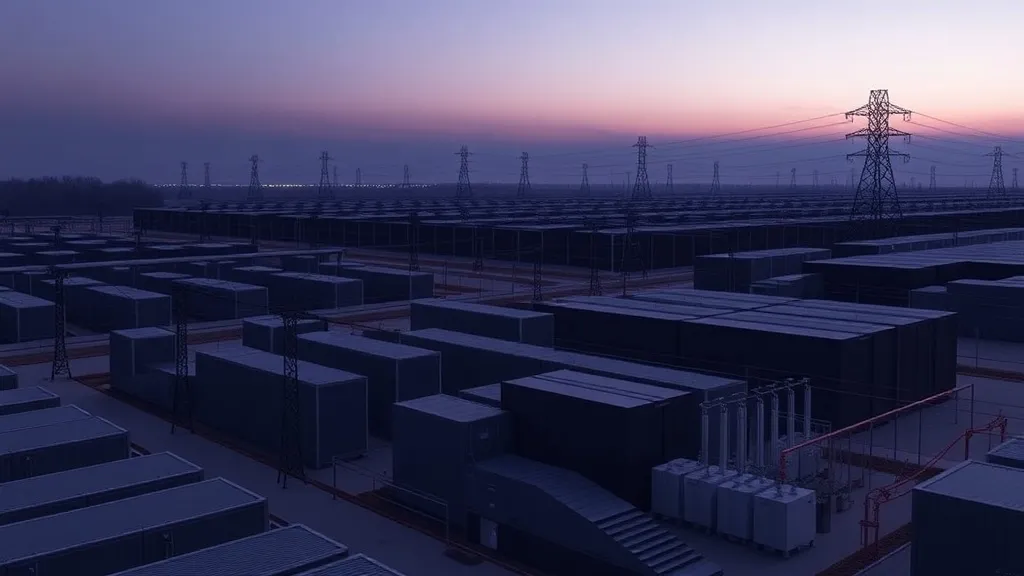
AI campuses are increasingly running on purpose-built microgrids rather than utility feeds. A new microgrid is set to supply 100% of the power for an AI data center in Ohio manufacturing.net, and Energy Vault has broken ground on a Texas campus built around modular data centers for Crusoe powermag.com. This is happening against a broader industrial automation build-out projected to keep expanding through 2035 marketresearchfuture.com. Each campus is its own control environment, with its own vendors, firmware, and attack surface.
The question worth asking is whether that infrastructure layer is becoming a compliance input for the AI systems running on top of it, under the EU AI Act or ISO 42001. The honest answer right now is: probably, but untested. No regulator or accredited certification body has published guidance stating that microgrid instability voids a conformity assessment or an ISO 42001 certificate. The claim that an unstable power layer creates a “documented gap” is a plausible reading of where these frameworks are heading, not a settled legal fact, and buyers should treat it accordingly rather than as an established finding.
What is verifiable is that the market is already pricing this uncertainty. Dili raised $21.7 million specifically to bring AI compliance tooling to the infrastructure boom, a bet that regulators and auditors will eventually draw the line between physical infrastructure and AI system compliance techcrunch.com. Separately, Industrial Equipment News has been arguing that manufacturers broadly have not yet operationalized continuous compliance for cybersecurity, a gap that predates and extends well beyond AI Act specifics ien.com. That framing cuts against treating this as an AI-specific compliance failure. It looks more like a general OT security maturity problem that AI campuses happen to be exposing at scale.
There is also a capacity argument that complicates the picture further. The Xometry Foundation and MxD have partnered specifically to expand cybersecurity compliance access for small and mid-sized manufacturers manilatimes.net, which signals that
Board record
This briefing was written by Kin and reviewed by an independent board of 7 models before publication. Ruling: CLEARED.
| Seat | Reviewer | Finding |
|---|---|---|
| Chair · Editorial Judgment | Claude | cleared. The argument is coherent and notably honest about its own epistemic limits—explicitly flagging that the compliance-infrastructure link is ‘plausible reading’ not ‘settled legal fact’—though the piece |
| Source & Claim Verification | Qwen · hosted fallback (qwen-2.5-72b-instruct) | cleared. Most factual claims are supported by citations, but the claim about the Xometry Foundation and MxD partnership is incomplete and lacks a clear citation. |
| Regulatory & Framework Fidelity | Mistral | held. The briefing acknowledges regulatory uncertainty but lacks precise mapping to ISO 42001, EU AI Act, or FDA/MDR/IVDR requirements, treating them as a monolith rather than distinct frameworks. |
| Technical Accuracy | Llama | cleared. The article accurately discusses the emerging trend of AI campuses running on microgrids and the potential compliance implications, but lacks technical depth in explaining microgrid instability and it |
| Bias, Balance & Hype Control | Gemini | cleared. The briefing effectively identifies and counters potential vendor hype by clearly distinguishing between plausible future interpretations and established facts regarding compliance, while also providi |
| Novelty & Non-Duplication | Grok | cleared. The microgrid-to-AI-Act/ISO 42001 compliance link is an original speculative synthesis absent from the cited wire items, even though the underlying campus, funding, and OT-maturity stories are standar |
| Validation | DeepSeek | cleared. The briefing correctly presents the central claim—that microgrid instability creating a compliance gap is a plausible but untested assumption—as a hypothesis rather than a settled fact. |
Sources cited: 11. Validation challenges: 0. Review cost: about $0.04. Learn how these briefings are written and verified.
Record corrected 29 September 2026. This seat was originally listed as running on our own local hardware. It never did: every review before this date fell back to a hosted model, and the row above now names the model that actually ran.