Sun Aug 09
The Oversight Question Autonomous Diagnostic AI Hasn't Answered
FDA's latest device clearances shift AI from assistive to autonomous interpretation, and compliance teams still lack a shared standard for human oversight.
The Oversight Question Autonomous Diagnostic AI Hasn’t Answered
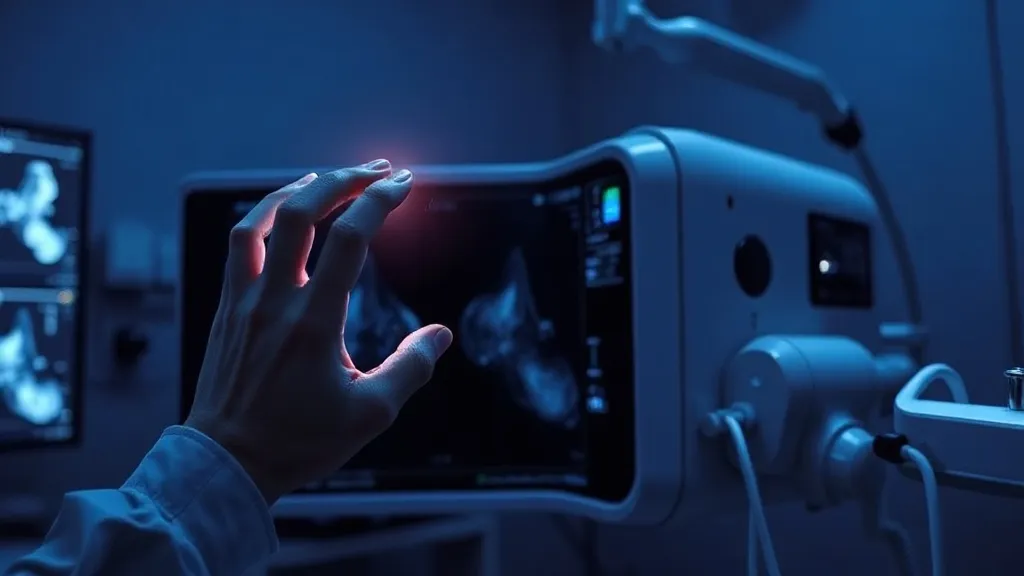
Three FDA clearances landed within weeks of each other, and together they mark a shift regulators haven’t fully priced in. Caristo Diagnostics won de novo authorization for a tool that quantifies coronary inflammation and heart attack risk directly from imaging, without requiring an obstructive lesion to trigger the assessment MedTech Dive. DeepHealth received 510(k) clearance for a system that reads breast ultrasound images, characterizes lesions against ACR BI-RADS categories, and drafts the report itself MedTech Dive HIT Consultant. And Vexev raised $6 million to commercialize VxWave, a robotic vascular ultrasound platform built to run autonomously and standardize scan quality without a sonographer at the console BioSpace.
Each clearance is defensible on its own merits. Together they describe a pattern: the physician’s role is moving from confirming an AI-flagged finding to reviewing an AI-generated conclusion, or in Vexev’s case, an AI-acquired scan. That is a different risk posture than the assistive tools that dominated the last five years of FDA clearances, and the agency’s clearance letters don’t yet spell out, in comparable terms across devices, what oversight a radiologist or cardiologist must exercise before signing off.
This gap matters because the regulatory language is catching up in pieces, not as a unified standard. The FDA and EMA’s newly published ten principles for AI in drug development explicitly name human oversight as a governance pillar, alongside data governance and model performance Forbes. That framework was written for drug development, not diagnostic devices, but it signals where FDA’s thinking is headed. Meanwhile, FDA’s draft guidance on AI-generated evidence for regulatory decisions is still just that, draft Technology Networks. Device manufacturers are clearing autonomous or near-autonomous tools under 510(k) and de novo pathways built for an earlier generation of assistive software, and the oversight expectations attached to each clearance are negotiated case by case rather than derived from a published standard.
For hospital systems and device buyers, this creates a practical diligence problem. A clearance letter tells you what the device is authorized to do. It does not tell you, in a form you can audit later, what level of clinician review the manufacturer’s own validation data assumed. If Caristo’s risk score, DeepHealth’s report, or Vexev’s autonomous scan later factors into a malpractice claim or a payer audit, the oversight protocol your institution adopted at deployment is what gets scrutinized, not the FDA’s letter.
The practical move is to stop waiting for FDA to standardize this and build your own oversight documentation now. That means specifying, for each cleared AI tool in your workflow, exactly what independent clinical review occurs before an AI output becomes part of the patient record, and keeping that specification current as manufacturers push toward greater autonomy. The clearances are arriving faster than the shared language for governing them. Institutions that write their own oversight standard first will not be caught negotiating one under audit pressure later.
Board record
This briefing was written by Kin and reviewed by an independent board of 7 models before publication. Ruling: CLEARED.
| Seat | Reviewer | Finding |
|---|---|---|
| Chair · Editorial Judgment | Claude | cleared. The central argument—that autonomous diagnostic AI clearances are outpacing standardized oversight frameworks, creating institutional liability gaps—is coherent and well-supported by the three device |
| Source & Claim Verification | Qwen · local | cleared. Most factual claims are supported by citations, but a few lines lack direct references, such as the discussion on the practical diligence problem for hospital systems. |
| Regulatory & Framework Fidelity | Mistral | cleared. The briefing accurately identifies gaps in FDA oversight for autonomous diagnostic AI but does not substantively address ISO 42001, EU AI Act, or MDR/IVDR requirements. |
| Technical Accuracy | Llama | cleared. The article accurately describes recent FDA clearances for autonomous diagnostic AI tools and highlights the need for standardized oversight protocols, although it could benefit from more technical de |
| Bias, Balance & Hype Control | Gemini | cleared. The briefing effectively identifies a gap in regulatory oversight for increasingly autonomous AI diagnostics, but could strengthen its counterarguments by explicitly addressing the FDA’s existing effo |
| Novelty & Non-Duplication | Grok | held. The three clearances are straight commodity wire items and the oversight-gap thesis is an evergreen AI-governance trope, not a non-duplicative insight versus ongoing medtech/regulatory coverage. |
| Validation | DeepSeek | cleared. The central claim that FDA clearances for autonomous diagnostic tools lack a standardized, auditable oversight requirement is validated by the provided sources and the absence of contradictory evidenc |
Sources cited: 14. Validation challenges: 0. Review cost: about $0.04. Learn how these briefings are written and verified.