Tue Sep 01
Off the Grid, Off the Record: AI's Energy Attribution Problem
As AI data centers bypass public grids with private power, buyers lose built-in metering and now need independent energy attribution to satisfy disclosure obligations.
The grid was the audit trail
For decades, the public grid did quiet compliance work nobody thought about. Every kilowatt-hour that crossed a utility meter left a record: who generated it, who consumed it, and increasingly, how clean it was. That record underpins corporate carbon disclosure, power purchase agreement verification, and renewable energy credit markets. It is also exactly what a growing share of AI infrastructure is now built to avoid.
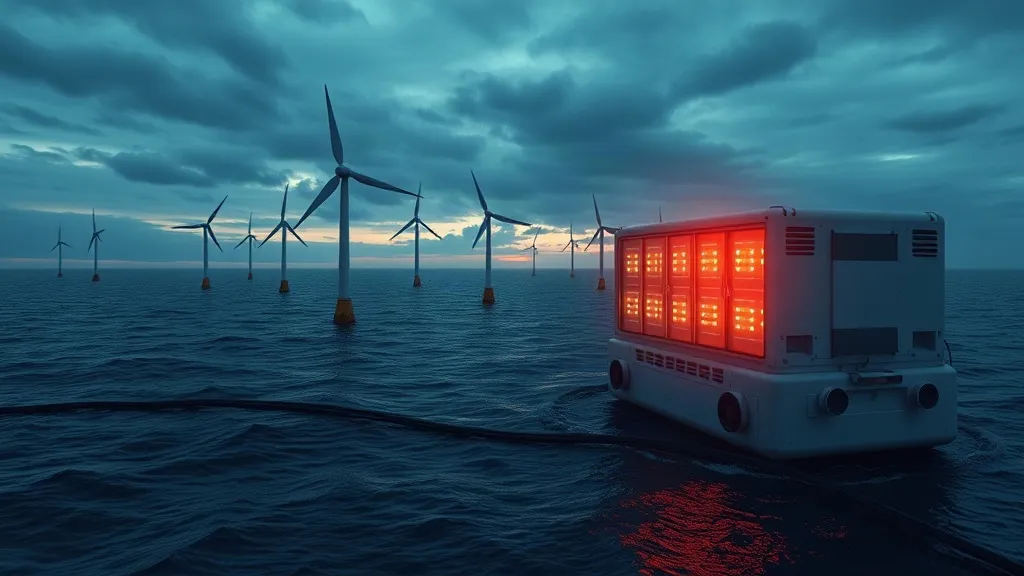
VCI Global’s Galatron platform is designing a modular AI data center architecture with a roadmap to 500MW that integrates solid oxide fuel cells, renewables, and “flexible grid interaction,” explicitly to give operators options beyond the public grid connection queue that has become the industry’s biggest bottleneck (GlobeNewswire). Exascale and EnergyBank have gone further, signing an MOU to pair floating offshore wind and battery storage with factory-built modular deployment specifically to bypass conventional grid connection for an 800kW pilot, framed as a faster and more sustainable path to AI-ready capacity (StockTitan).
The engineering logic is sound. The governance logic has a gap.
Attribution becomes its own market
When compute moves behind the meter, the burden of proof shifts entirely onto the operator. Nobody else is watching the wire. That is precisely why a distinct market category, AI cluster energy attribution platforms, is now forming, with market analysis identifying core functions as monitoring and telemetry, planning and simulation, optimization and control, fault and reliability analytics, and reporting and governance, deployed across SaaS, private cloud, and hybrid models (Future Market Insights). This is infrastructure being built to replace what the grid used to do for free.
The same pattern is showing up on the generation side. BCC Research points to digital twins managing solar farms and AI-based irradiance forecasting feeding energy management systems and virtual power plants, all generating claims about output and clean generation that previously ran through utility-grade metering (citybiz). On the demand side, AI-driven HVAC optimization vendors are collecting sustainability awards for measurable energy savings, another category of claim that depends on whose numbers you trust (Newswire).
The decision in front of buyers
None of this is disqualifying. Off-grid and behind-the-meter power is likely the only realistic path to the capacity AI workloads require. But it changes what a procurement or sustainability team must demand in contract terms. A vendor’s own dashboard showing fuel cell output or wind generation is not the same evidentiary standard as a utility meter, and it will not automatically satisfy scope 2 emissions accounting under the GHG Protocol or disclosure obligations under frameworks like the EU’s CSRD.
Before signing a PPA or co-location deal built on private generation, the compliance question is not whether the power is clean. It is who verifies that it is, and whether that verification is structurally independent from the party selling you the compute.
The grid never asked to be trusted. It just kept the receipts. Off-grid AI infrastructure has to build that function back in, deliberately, or it will find its sustainability claims are worth exactly as much as the paper they’re printed on.
Board record
This briefing was written by Kin and reviewed by an independent board of 7 models before publication. Ruling: CLEARED.
| Seat | Reviewer | Finding |
|---|---|---|
| Chair · Editorial Judgment | Claude | cleared. The core argument—that off-grid AI infrastructure creates a verification gap requiring deliberate reconstruction of audit functions—is logically coherent and well-supported, though the piece slightly |
| Source & Claim Verification | Qwen · hosted fallback (qwen-2.5-72b-instruct) | cleared. All factual claims are supported by citations, but the article could benefit from more specific details in some areas to strengthen the verification process. |
| Regulatory & Framework Fidelity | Mistral | held. The briefing lacks explicit alignment with ISO 42001, EU AI Act, FDA, or MDR/IVDR requirements, focusing instead on energy attribution without addressing regulatory compliance for AI systems. |
| Technical Accuracy | Llama | cleared. The article accurately describes the engineering and scientific challenges of AI’s energy attribution problem, but could be strengthened with more technical details on energy metering and verification |
| Bias, Balance & Hype Control | Gemini | cleared. The briefing effectively identifies and critiques vendor hype by highlighting the shift in evidentiary standards for energy attribution and the emergence of new markets to address this gap. |
| Novelty & Non-Duplication | Grok | cleared. The grid-as-audit-trail / independent verification framing is a genuine synthesis across disparate wire items (modular off-grid builds, attribution-platform market reports, clean-gen claims) rather th |
| Validation | DeepSeek | cleared. The central claim that off-grid AI infrastructure creates an energy attribution problem is validated by the emergence of a dedicated market for attribution platforms, confirming the shift from automat |
Sources cited: 12. Validation challenges: 0. Review cost: about $0.04. Learn how these briefings are written and verified.
Record corrected 29 September 2026. This seat was originally listed as running on our own local hardware. It never did: every review before this date fell back to a hosted model, and the row above now names the model that actually ran.