Tue Oct 20
Digital Pathology AI Scales Into a Validation Framework Built for Assays, Not Algorithms
As AI-assisted digital pathology expands across CLIA-certified labs, the real decision is whether existing CAP validation checklists can actually capture algorithmic performance.
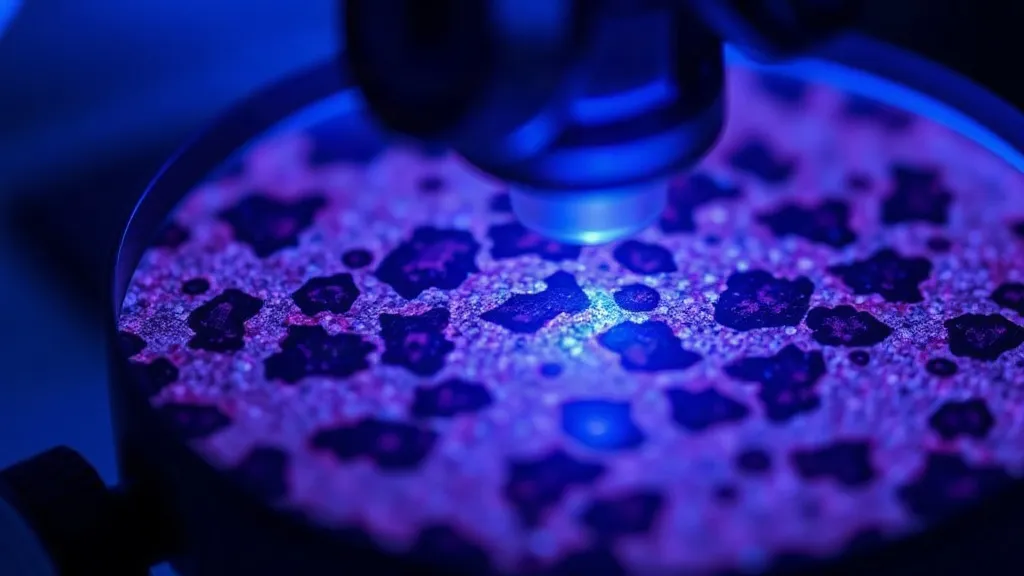
NeoGenomics is scaling its digital pathology infrastructure with Indica Labs across a network of CAP-accredited, CLIA-certified laboratories, extending a technology relationship that dates back to 2015 clpmag.com. The expansion is framed as infrastructure, but for lab directors the real question is narrower and harder. CLIA already governs the laboratory. CAP already translates CLIA requirements into detailed checklist items covering analytical accuracy, precision, sensitivity, specificity, and reference ranges www.labmanager.com. The open question is whether that checklist, written for chemistry assays and PCR panels, produces meaningful validation evidence when the thing being validated is an AI model reading tissue.
This is not a governance gap in the sense of missing oversight. CLIA and CAP are not absent from digital pathology the way federal rules are absent from revenue cycle AI decision logic. The lab is covered. The accreditation body is active. What is unresolved is fit. A PCR assay has a fixed chemistry and a defined failure mode. An AI pathology model trained on one image acquisition pipeline, one staining protocol, one scanner vendor, behaves differently when any of those inputs shift, and CAP’s existing validation language was not written with that kind of drift in mind. Lab directors signing off on AI-assisted digital pathology are applying a checklist built for analytical chemistry to a system whose performance characteristics move with data distribution, not just with reagent lot.
The stakes are concrete. CLIA validation failures carry direct consequences for test reporting and patient results, and CAP inspectors expect documented performance specifications before a method goes live www.labmanager.com. As AI pathology tools move from pilot to production across multi-site lab networks, that documentation burden scales with the deployment, not against it. A model validated at one site on one scanner configuration is not automatically validated at the next site running a different instrument, even under the same CLIA certificate.
This matters now because the deployment pace is accelerating while the underlying standard stays static. Broader reviews of hospital AI governance have already flagged that federal oversight authority is split across agencies that each hold a partial slice of jurisdiction, with FDA evaluating software as a medical device while other dimensions of deployment fall outside any single regulator’s lane bioengineer.org. Clinical laboratories sit in a slightly different position: CLIA and CAP are real, binding, and enforced. The exposure is not regulatory absence. It is the gap between what the checklist was designed to catch and what an AI model actually needs to demonstrate.
For lab leadership, the decision is not whether to adopt AI-assisted pathology. Scale is already happening. The decision is whether validation protocols get rewritten to test for the failure modes specific to AI, such as performance degradation across scanner hardware, staining variation, and population shift, before CAP inspectors or a bad outcome force the question. The accreditation body is not going to write that standard for you. It will inspect against what your lab documents.
Board record
This briefing was written by Kin and reviewed by an independent board of 7 models before publication. Ruling: CLEARED.
| Seat | Reviewer | Finding |
|---|---|---|
| Chair · Editorial Judgment | Claude | cleared. The core argument—that CLIA/CAP validation frameworks designed for fixed-chemistry assays are a poor fit for AI models whose performance drifts with data distribution—is coherent, specific, and well-s |
| Source & Claim Verification | Qwen · hosted fallback (qwen-2.5-72b-instruct) | cleared. Most claims are supported by the provided sources, but several sources could not be opened, potentially affecting the verification of some claims. |
| Regulatory & Framework Fidelity | Mistral · fallback (mistral-medium-3.1) | cleared. The briefing thoroughly addresses CLIA and CAP but omits critical cross-references to ISO 42001, EU AI Act, NIST AI RMF, and other non-healthcare frameworks where applicable. |
| Technical Accuracy | Llama | cleared. The article accurately describes the challenges of validating AI models in digital pathology under existing CLIA and CAP frameworks, highlighting the mismatch between traditional assay validation prot |
| Bias, Balance & Hype Control | Gemini | cleared. The briefing effectively identifies the core counterargument to vendor hype: existing regulatory frameworks are ill-suited for AI’s unique failure modes, despite the presence of oversight. |
| Novelty & Non-Duplication | Grok | cleared. NeoGenomics/Indica digital-pathology scale-up plus the CLIA/CAP assay-checklist misfit for scanner/stain/distribution drift is a concrete new fact and decision frame not covered in the prior hospital- |
| Validation | DeepSeek | cleared. The briefing’s central claim—that CAP/CLIA validation checklists, designed for stable chemistry assays, are inadequately suited to catch AI-specific failure modes like drift across scanners or stains— |
Sources cited: 40. Validation challenges: 0. Production cost: $0.10 (measured across drafting, revisions and every board review, plus an estimated image). Learn how these briefings are written and verified.