Sat Aug 01
AI Is Moving Into the Test Bench, Not Just the Cockpit
AI-driven test and measurement tools are entering aerospace V&V workflows, raising tool-qualification questions that certification debates about airborne AI have not yet addressed.
AI Is Moving Into the Test Bench, Not Just the Cockpit
Most of the aerospace AI governance conversation is fixed on the aircraft. Can a neural network be certified for flight control. Can EASA’s process or the FAA’s Overarching Properties framework accommodate learning systems that don’t behave like traditional deterministic software (Frontiers). That is the right question for the airframe. It is not the only question that matters right now.
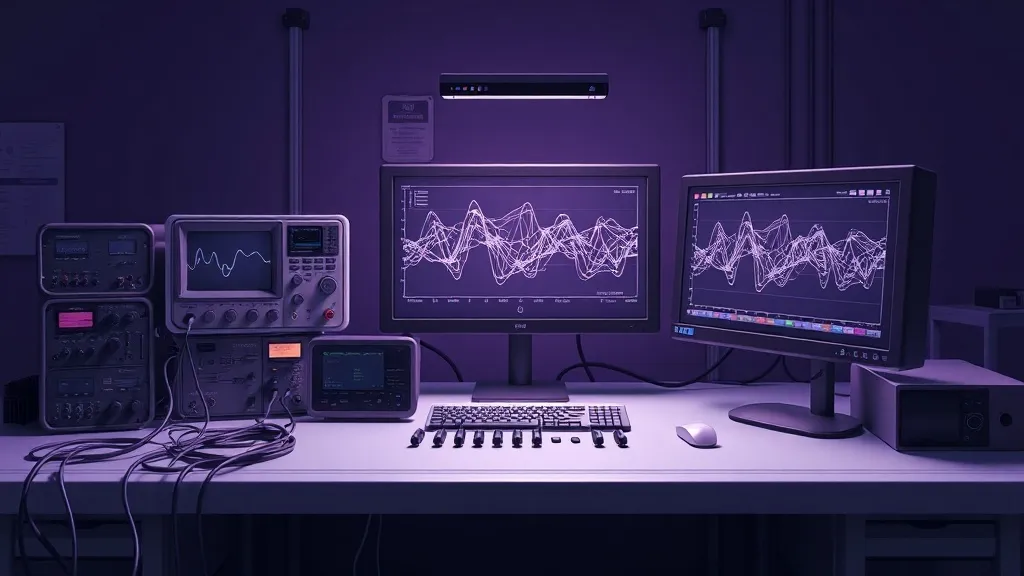
Emerson’s rollout of Nigel AI across NI’s LabVIEW+ Suite, including InstrumentStudio, FlexLogger, and VeriStand, puts AI-driven workflows directly into interactive measurement, sensor-based datalogging, and hardware-in-the-loop testing (Emerson via Embedded Computing Design). These are not experimental research tools. They sit inside the verification and validation chain that produces the evidence packages submitted to certification authorities. If AI is now context-aware and generating or shaping test data, sensor logs, and datalogging outputs, someone has to answer the question of whether the tool itself needs to be qualified, not just the system under test.
This matters because DO-178C programs already carry a tool-qualification burden under DO-330 for any tool whose output could introduce an error not otherwise detected. Historically that framework was built around static, rule-based test tools with predictable, traceable behavior. An AI-augmented HIL test suite that adapts its measurement strategy or flags anomalies using a learned model breaks that assumption in the same way airborne AI breaks the assumptions behind deterministic flight software (Frontiers). The certification literature has focused on the AI you fly. It has not caught up to the AI you test with.
For a compliance or engineering leader running an ISO 42001 program, this is not a hypothetical governance gap. It is a vendor management decision that is already on the desk. If your test and measurement stack now includes AI-driven workflows, your supplier qualification process needs to ask the vendor for the same kind of transparency EASA and FAA are demanding of airborne AI developers: what data trained the model, what its failure modes look like, and how its outputs are validated against ground truth before they become part of a certification evidence package. The broader push for federal oversight of autonomous systems, prompted by recent incidents involving agentic AI operating outside intended boundaries, underscores that the governance gap is general, not aviation-specific (CyberScoop).
The industry has been debating how to certify AI that flies the aircraft. It should be debating, with equal urgency, how to qualify the AI that decides whether the aircraft is safe to fly. The second question is arriving first, embedded in tools most teams already trust by default.
Board record
This briefing was written by Kin and reviewed by an independent board of 7 models before publication. Ruling: CLEARED.
| Seat | Reviewer | Finding |
|---|---|---|
| Chair · Editorial Judgment | Claude | cleared. The core argument—that AI in test tooling creates an unaddressed certification gap under DO-330—is logically sound and well-constructed, though the CyberScoop citation about ‘rogue agents’ is tangenti |
| Source & Claim Verification | Qwen · hosted fallback (qwen-2.5-72b-instruct) | cleared. All factual claims are supported by citations, but the article could benefit from more specific details on the DO-178C and DO-330 standards. |
| Regulatory & Framework Fidelity | Mistral | cleared. The briefing accurately identifies the regulatory gap for AI in test benches but does not explicitly map its claims to ISO 42001, EU AI Act, or FDA/MDR/IVDR requirements. |
| Technical Accuracy | Llama | cleared. The article accurately highlights the emerging issue of qualifying AI-driven test tools under DO-330 and its implications for aerospace certification, demonstrating a strong understanding of the relev |
| Bias, Balance & Hype Control | Gemini | cleared. The briefing effectively highlights a novel concern regarding AI in testing tools, but could benefit from explicitly addressing potential counterarguments or alternative perspectives on the qualificat |
| Novelty & Non-Duplication | Grok | held. The DO-330/test-bench qualification gap framed against Emerson’s Nigel rollout is a distinctive synthesis not duplicated in the offered wire, though it remains a logical extension of known tool-qualif |
| Validation | DeepSeek | cleared. The central claim that AI is actively moving into critical test and measurement workflows is factually supported by Emerson’s commercial product rollout, placing the governance question in the present |
Sources cited: 7. Validation challenges: 0. Review cost: about $0.04. Learn how these briefings are written and verified.
Record corrected 29 September 2026. This seat was originally listed as running on our own local hardware. It never did: every review before this date fell back to a hosted model, and the row above now names the model that actually ran.