Mon Oct 19
Two Certification Logics, One AI Procurement Decision
Safety-critical manufacturing is splitting into standards that admit AI as verification evidence and standards that exclude it by design, and buyers need to know which applies.
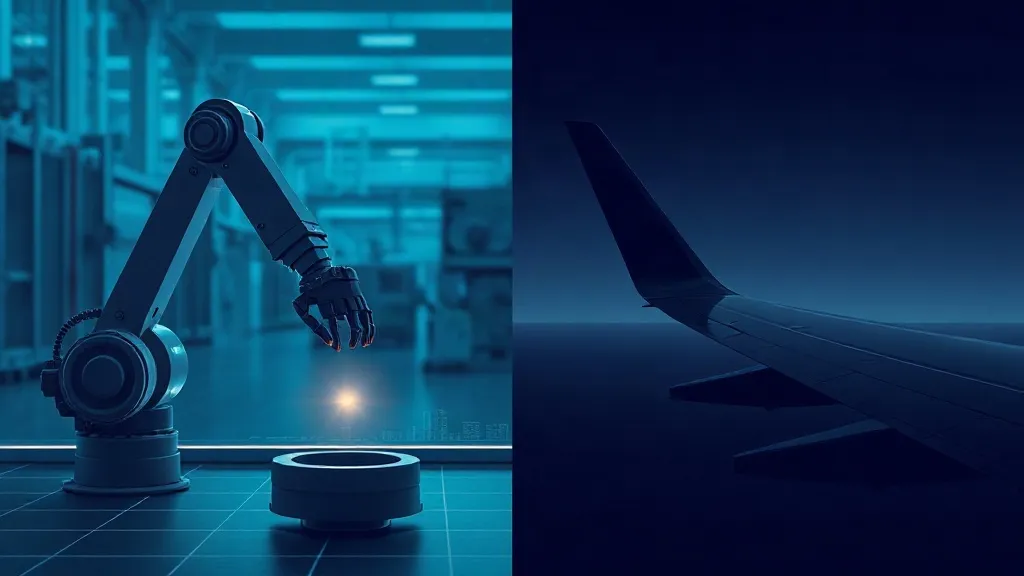
Two certification logics, one AI procurement decision
Safety-critical manufacturing just split into two incompatible answers to the same question: can AI touch the verification chain. Compliance leaders buying AI tooling for engineering workflows need to know which answer applies to their system, because the standards bodies are not converging. They are diverging on purpose.
On one side, MathWorks has rolled out TÜV SÜD-certified guidance for using agentic AI, including platforms like GitHub Copilot, Codex, Gemini CLI, and Claude Code, inside ISO 26262 engineering workflows for automotive software engineering.com. The Polyspace Agentic Toolkit extends this into code robustness analysis, coding-standard compliance, and defect detection AOL. The underlying logic: AI agents can operate inside the development lifecycle as long as their output remains traceable, reviewable evidence, not the safety function itself. A human verification step still closes the loop.
The same pattern shows up in robotics. Safetics and Doosan Robotics are using their safety monitoring app on the Dart-Suite platform to generate design-stage evidence for power and force limiting verification under ANSI/A3 R15.06-2025, ISO 10218-2:2025, and ISO 12100 automate.org. Again, AI produces evidence. It does not make the final safety determination.
Aerospace draws the opposite line, and it draws it structurally rather than procedurally. DO-178C, ARP4754B, and ARP4761A were written for systems whose behavior is fully specifiable in advance, and the certification basis for anything that could cause loss of the aircraft demands exhaustive verification evidence built on that specifiability bioengineer.org. AI’s core property, probabilistic behavior that cannot be exhaustively enumerated, breaks the premise the standard is built on. No tooling update fixes this. The exclusion is architectural, not a maturity gap waiting on better evidence-generation software.
That distinction is the decision point for industrial buyers right now. ISO 26262 and the ISO 10218-2 family treat AI as an evidence generator operating under human review and traceability, which is why tool vendors can earn third-party certification for AI-assisted workflows inside them. DO-178C treats determinism as a precondition for certification eligibility, which means no amount of “certified AI guidance” changes the underlying exclusion for Level A software functions.
The risk for compliance teams is importing the wrong mental model. A vendor’s TÜV SÜD certification for AI inside ISO 26262 says nothing about whether a similar AI capability is admissible under DO-178C, and a procurement team that assumes certification language travels across frameworks will make a decision the standard was never designed to support. The question to ask every AI vendor pitching safety-critical tooling is not whether they are certified. It is which certification logic their standard actually runs on, and whether your system’s framework admits AI as evidence or excludes it as a matter of design.
Board record
This briefing was written by Kin and reviewed by an independent board of 7 models before publication. Ruling: CLEARED.
| Seat | Reviewer | Finding |
|---|---|---|
| Chair · Editorial Judgment | Claude | cleared. The core argument—that ISO 26262/ISO 10218 treat AI as evidence-generator under human review while DO-178C excludes AI architecturally due to determinism requirements—is coherent and well-supported, t |
| Source & Claim Verification | Qwen · local | held. The draft’s central factual claims that standards bodies are diverging on purpose and that DO-178C makes determinism a certification precondition are not traced to any offered source. |
| Regulatory & Framework Fidelity | Mistral | cleared. The briefing accurately contrasts ISO 26262 and DO-178C certification logics but omits critical framework-specific fidelity checks for NIST AI RMF, EU AI Act, HIPAA, CLIA, and NERC CIP, which are mand |
| Technical Accuracy | Llama | cleared. The article accurately describes the differing approaches to AI certification in safety-critical industries, such as automotive and aerospace, and highlights the importance of understanding the specif |
| Bias, Balance & Hype Control | Gemini | cleared. The briefing effectively identifies and contrasts two distinct certification logics, clearly highlighting the vendor hype around ‘certified AI guidance’ and its limitations across different regulatory |
| Novelty & Non-Duplication | Grok | cleared. The comparative frame—ISO 26262/ISO 10218 treating AI as certifiable evidence-generator vs DO-178C’s architectural exclusion of non-determinism—is a genuine synthesis not present as a single decision |
| Validation | DeepSeek | cleared. The central claim that aerospace standards (DO-178C) structurally exclude AI from core certification due to non-determinism, while automotive/robotics standards permit it as a traceable evidence-gener |
Sources cited: 20. Validation challenges: 0. Review cost: about $0.04. Learn how these briefings are written and verified.