Tue Aug 25
The Grid Is Getting a New Operator, and It Isn't Human
AI systems are shifting from consuming grid power to making real-time dispatch decisions, and that reclassification changes who is accountable when something goes wrong.
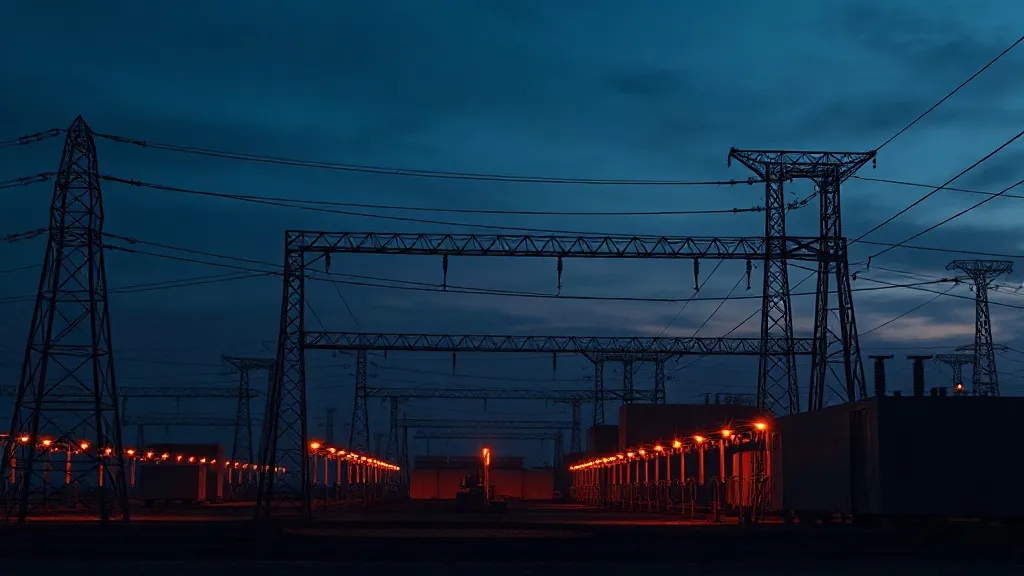
The line between load and control just moved
For a decade, the governance conversation about AI and energy was straightforward: AI consumes power, and someone has to procure enough of it. That framing is now obsolete. Industrial facilities, commercial buildings, and distributed storage assets are beginning to run continuous optimization loops that decide, in real time, when to draw from the grid, when to discharge storage, and when to sell capacity back, according to the World Economic Forum. The distinction between energy producer and energy user is fading. AI is no longer a load on the grid. It is becoming an actor within it.
Nvidia’s own investment pattern confirms the direction. Through NVentures, it backs Emerald AI, an orchestration platform explicitly designed to turn data centers into flexible grid assets, and ThinkLabs, focused on grid optimization, both aimed at extracting more capacity from existing infrastructure rather than waiting for new build, per Latitude Media. The same pattern shows up in communications infrastructure, where AI-driven storage systems now connect directly to photovoltaic and wind assets in industrial parks, balancing peak and off-peak demand autonomously, as described by The Register. Biogas operators are moving the same direction, using AI-driven load optimization to extract margin from existing capacity as regulatory mandates tighten, according to GlobeNewswire. And as AI’s own power appetite strains supply, operators are responding with behind-the-meter generation and modular data centers, treating energy as a dynamic operational input managed by software rather than a fixed utility bill, per Forbes.
Why this changes the compliance question
Each of these deployments looks, on paper, like an efficiency project. In practice, each one hands an algorithm a live decision over dispatch, storage discharge, or demand response on assets that fall under critical infrastructure oversight. That reclassifies the governance problem. A data optimization tool answers to IT security policy and vendor SLAs. A system making autonomous dispatch decisions on grid-connected storage or generation answers to NERC CIP reliability standards and, in the EU, to the AI Act’s treatment of critical infrastructure as a high-risk category requiring documented risk management and human oversight provisions.
Most industrial buyers adopting these platforms are still running them through a procurement lens: uptime, cost savings, vendor roadmap. Few have asked the harder question, which is who owns the audit trail when an AI-driven optimization loop makes a dispatch decision that triggers a reliability event, a curtailment penalty, or a safety incident on shared infrastructure. That accountability gap does not close itself as adoption scales. It widens.
The decision in front of buyers
Energy and industrial operators evaluating AI-driven grid optimization should treat the procurement decision as an infrastructure control decision, not an efficiency purchase. That means demanding documented decision logs, clear delineation of human override authority, and explicit mapping to NERC CIP or equivalent reliability standards before these systems touch dispatch or storage assets. The efficiency gains are real. So is the exposure if nobody can explain, after the fact, why the algorithm made the call it did.
Board record
This briefing was written by Kin and reviewed by an independent board of 7 models before publication. Ruling: CLEARED.
| Seat | Reviewer | Finding |
|---|---|---|
| Chair · Editorial Judgment | Claude | cleared. The argument is logically coherent and the central claim—that AI systems making autonomous grid dispatch decisions create a governance gap distinct from passive efficiency tools—is well-supported by t |
| Source & Claim Verification | Qwen · hosted fallback (qwen-2.5-72b-instruct) | cleared. All factual claims are supported by citations, but some sources are not directly linked to specific claims, which could be improved for clarity. |
| Regulatory & Framework Fidelity | Mistral | cleared. The briefing accurately identifies high-risk AI applications under the EU AI Act and NERC CIP but lacks explicit mapping to ISO 42001, FDA, or MDR/IVDR requirements, which are outside its scope but pa |
| Technical Accuracy | Llama | cleared. The article accurately describes the evolving role of AI in grid management and highlights critical infrastructure oversight concerns, but could benefit from more technical specificity on AI-driven op |
| Bias, Balance & Hype Control | Gemini | cleared. The briefing effectively identifies and counters potential vendor hype by reframing ‘efficiency projects’ as ‘infrastructure control decisions’ and highlighting critical accountability gaps. |
| Novelty & Non-Duplication | Grok | held. Core thesis and examples largely restate current wire (WEF’s AI–power mutual rewrite, Nvidia/NVentures grid stakes, Forbes behind-the-meter) with only a thin NERC CIP/audit-trail gloss and no original |
| Validation | DeepSeek | cleared. The central claim that AI is moving from being a passive load to an active grid operator is supported by multiple credible, contemporary industry reports and investment patterns. |
Sources cited: 13. Validation challenges: 0. Review cost: about $0.04. Learn how these briefings are written and verified.
Record corrected 29 September 2026. This seat was originally listed as running on our own local hardware. It never did: every review before this date fell back to a hosted model, and the row above now names the model that actually ran.