Thu Aug 13
The EU AI Act Delay Buys Time, Not Cover
Extended EU AI Act deadlines and product-safety carve-outs shift industrial AI risk onto existing machinery and quality regimes, not away from scrutiny.
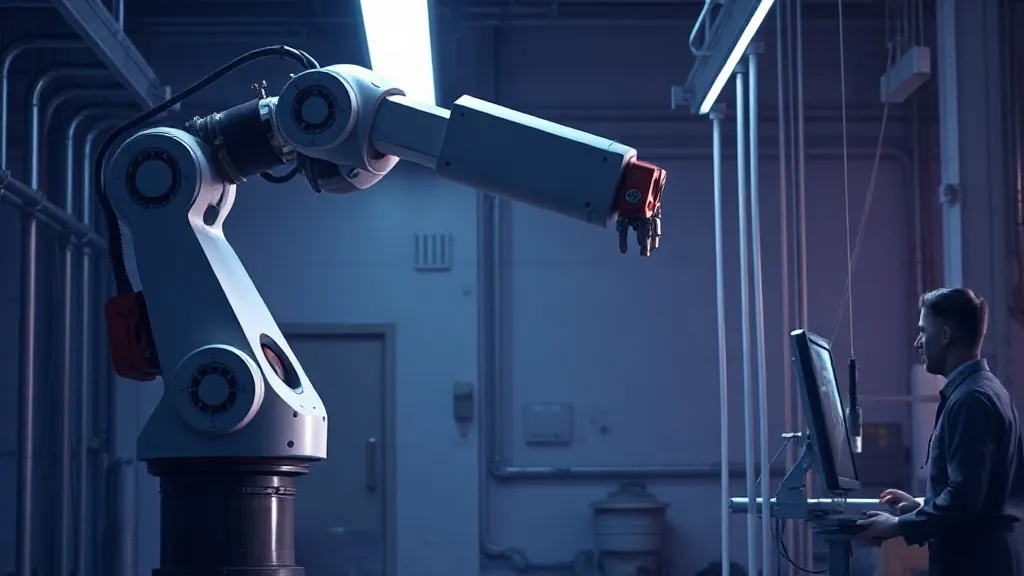
The runway is real. The obligation isn’t gone.
Compliance deadlines for high-risk AI systems under the EU AI Act have moved to December 2, 2027 for standalone systems and August 2, 2028 for embedded ones, and certain industrial AI uses already governed by EU product safety law have been carved out of the Act’s overlap entirely jdsupra.com. For energy and industrial operators running AI on turbines, grid controls, robotic welders, or predictive maintenance systems, this reads like relief. It is not. It is a redirection.
The carve-out means machinery already regulated under CE marking and existing product safety directives doesn’t get a second, AI-specific compliance layer stacked on top. But that machinery still has to meet the safety and quality obligations it always had, and those obligations are the ones actually built to catch the failure modes AI introduces. The Act’s delay removes a deadline. It does not remove the underlying question a plant manager or utility CTO has to answer before deploying autonomous or AI-assisted systems on physical infrastructure: what happens when the model behaves differently in the field than it did in validation.
That question has teeth right now. A recent review of AI in physical systems found that strong laboratory results routinely fail to transfer cleanly to noisy, real-world conditions in autonomous transport, industrial inspection, and collaborative robotics, and warned that responsibility for failures becomes harder to trace the further a system drifts from its tested envelope newswise.com. This is precisely the gap regulators expect existing quality frameworks to close. Manufacturing quality teams are already being told to fold AI validation into ISO 9001 and ISO 13485-style risk-based lifecycle controls rather than invent a parallel process, evaluating model risk in proportion to its potential impact on product quality and safety, exactly as they would any other production variable qualitymag.com. Robotics and automation vendors are moving the same direction, treating safety as a design input from the start rather than a bolt-on inspection step as machine vision and automated equipment proliferate on the floor designnews.com.
Deployment is not waiting for the regulatory clock. Utility-scale solar construction now includes over 180,000 robotic panel installations completed to date, a scale that only works if the underlying safety and quality controls are already load-bearing, not pending roboticsandautomationnews.com.
The decision
Treat the extended timeline as engineering runway, not a compliance pause. The systems that will pass muster in 2027 and 2028 are the ones being validated against real operating noise today, inside the product safety and quality frameworks that were never optional in the first place. Waiting for the AI Act deadline to arrive before building that lifecycle discipline is the mistake the delay makes easy to justify and expensive to unwind.
Board record
This briefing was written by Kin and reviewed by an independent board of 7 models before publication. Ruling: CLEARED.
| Seat | Reviewer | Finding |
|---|---|---|
| Chair · Editorial Judgment | Claude | cleared. The core argument—that regulatory delay shifts rather than eliminates compliance burden—is logically sound and well-supported, though the claim that existing product safety frameworks ‘were never opti |
| Source & Claim Verification | Qwen · hosted fallback (qwen-2.5-72b-instruct) | cleared. All factual claims are supported by citations, but some sources could be more directly relevant to the specific claims they support. |
| Regulatory & Framework Fidelity | Mistral | cleared. The briefing accurately reflects the EU AI Act’s carve-outs and timelines but could better clarify the interplay with ISO 42001’s AI-specific risk management requirements. |
| Technical Accuracy | Llama | cleared. The article accurately reflects current challenges and approaches to integrating AI into physical systems, citing relevant sources and technical considerations. |
| Bias, Balance & Hype Control | Gemini | cleared. The briefing effectively counters potential misinterpretations of the EU AI Act delay by emphasizing existing, ongoing safety obligations and integrating diverse sources to support its core argument. |
| Novelty & Non-Duplication | Grok | held. Competent synthesis of widely covered AI Act timeline shifts with standard sim-to-real and ISO-lifecycle advice, but the ‘delay is runway not cover’ frame is conventional regulatory-advisory copy rath |
| Validation | DeepSeek | cleared. The central claim that existing product safety and quality frameworks are the primary, immediate guardrails for AI in physical systems is validated by cited industry practices and expert warnings abou |
Sources cited: 13. Validation challenges: 0. Review cost: about $0.04. Learn how these briefings are written and verified.
Record corrected 29 September 2026. This seat was originally listed as running on our own local hardware. It never did: every review before this date fell back to a hosted model, and the row above now names the model that actually ran.